
















Sweden has signed deals with Finland’s ICEYE and Planet Labs of the USA to field a space-based intelligence, surveillance and reconnaissance (ISR) capability from later this year.
“In 2026, the first of about 10 Swedish satellites will be delivered to the Swedish armed forces,” the nation’s Defence Materiel Administration (FMV) procurement body says.
Announced on 12 January, its contracts cover the provision of services using both synthetic aperture radar (SAR) and electro-optical payloads.
“Our presence in space is in an expansion phase with a high rate of development, and thanks to this addition, we can see and operate at a longer distance and get an even better situational picture of how Russia and other actors are acting,” says armed forces space chief Anders Sundeman.
“This contribution to the collective capability in all NATO domains is of great strategic importance,” he adds.

Sweden had previously outlined an ambition to deploy its first military satellite by 2030, but the alliance member has dramatically accelerated procurement activities.
“It has taken six months from idea to contract,” says Carl-Fredrik Edstrom, head of the FMV’s aviation and space division. “This is a big step for the Swedish armed forces’ space capability,” he adds.
“The investment in space capabilities strengthens the armed forces and [Sweden’s] total defence, benefits partners and allies and ultimately makes our part of the world safer,” the FMV says.
Under a “multi-million, multi-year agreement”, ICEYE says Stockholm “will procure SAR satellites, data and software, along with the associated ground and technical systems required to establish a sovereign, space-based surveillance and intelligence capability”.
“The Swedish armed forces will own and operate the system, ensuring sovereign control over tasking, data and operational use to support national defence and security requirements”, the company adds.
ICEYE says its SAR satellites can provide “high-resolution imagery and data with ground resolution of up to 16cm, day or night, through cloud cover, rain, and snow – conditions that frequently limit traditional satellite imagery”.
“This capability is particularly vital across the Nordics, where long winter darkness, persistent overcast skies, and fast-changing weather can restrict visibility for extended periods,” it notes.
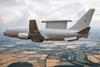
Sweden also is taking other measures to boost its ISR capabilities, with the nation’s air force due to field three Saab GlobalEye surveillance aircraft from later this decade. Adapted from Bombardier’s Global 6000 business jet, the platform will be capable of conducting simultaneous monitoring of airborne, ground-based and maritime threats.
The GlobalEye fleet will replace Saab 340-based Erieye airborne early warning and control aircraft which have already been gifted to Ukraine.