














The UK Royal Air Force (RAF) has edged closer to reinstating its lapsed airborne early warning and control (AEW&C) capability, following the arrival of an Indra-produced simulator at its Lossiemouth base in Scotland.
Housed within the service’s newly-named Aden Wing building, the Wedgetail simulator “is currently training the first aircrews in preparation for the E-7’s entry into service,” says Boeing UK.
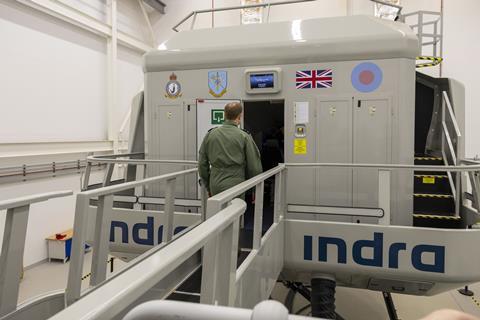
“This facility will be central to the operational success of the fleet and the training of future aircrew,” says Boeing UK & Ireland president Sir Jeremy Quin.
In addition to accommodating the new operational flight trainer, the building also will “provide essential support facilities for operations” by the RAF’s Lossiemouth-based 8 Sqn.
“Today marks the first step toward delivering the Wedgetail capability for the Royal Air Force,” 8 Sqn commanding officer Wing Commander Ben Fletcher notes of the 27 February training milestone.
The RAF is due to field its lead of three E-7As later this year. First flown in modified guise in September 2024, aircraft WT001 has been involved in test and evaluation, while modification work on the other pair continues at STS Aviation Services’ facility at Birmingham airport.
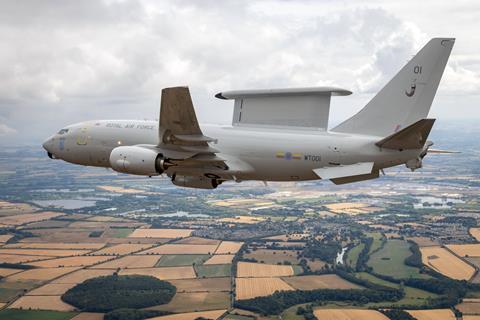
Once placed into use, the RAF’s Wedgetail AEW1 assets will provide its first AEW&C services since the Boeing E-3D Sentry fleet’s retirement in mid-2021. The new type was originally due to have reached initial operational capability in 2024.