












Russian authorities are to conduct an unscheduled inspection of leisure carrier Azur Air after alleging multiple instances of flight delays and passenger-rights violations.
The Moscow-based airline primarily operates Boeing 757-200s and 767-300ERs.
Transport supervisory authority Rostransnadzor says it requested that the prosecutor general’s office arrange the inspection, after “numerous violations”.
These included flight delays, failure to provide required services to passengers, and problems with refunds.
Rostransnadzor says the inspection will “comprehensively assess” the airline’s operations to verify compliance with federal regulations and determine whether any systemic issues are affecting flight safety and service quality.
Examiners will assess the condition of the fleet, review operational and technical documentation, and check the qualifications of crew and technical personnel.
“The inspection does not affect the airline’s operations,” Rostransnadzor points out. “The carrier continues to operate as planned, performing all scheduled flights.”
It expects the work to be completed by 5 March, after which it will determine whether to order responsive measures.
“If violations are confirmed, the airline may be subject to sanctions, including the suspension of its air operator certificate,” says the authority.
Azur Air insists it is providing “full co-operation” to the air transport regulators during the inspection period.
“Flight safety is Azur Air’s absolute priority,” it stresses. “All operational processes are structured in strict compliance with current civil aviation legislation and regulations.
“The airline maintains ongoing collaboration with the regulator and views any inspections as a standard element of its safety-assurance system and operational quality improvement.”
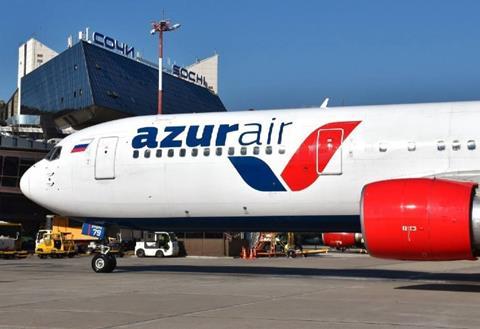
Azur Air is one of Russia’s three largest carriers, in terms of international flights, according to 2025 traffic data from federal air transport regulator Rosaviatsia.
But the airline has recently acknowledged various operational difficulties. One of its 767s has been temporarily grounded, after a 27 February incident involving a “foreign object” entering an engine during a Phu Quoc-Kazan service.
“Engine replacement is currently being considered,” it says.
This incident followed a series of problems over the last two months. It says its schedule was “negatively impacted” in January by airspace restrictions, weather conditions, and “aircraft malfunctions”.
Azur Air experienced interruptions to its contact centre as well as its booking system, while two 757 flights to Russian airports were diverted to China and Vietnam.
One of its flights from Phuket to Moscow, in the first week of February, had to return to Phuket after its landing-gear doors failed to retract.
Azur Air’s operations were further complicated in the same week by congestion at Phuket airport and the resort’s hotels during the tourist season.
The airline has also had to cope with airspace closures, including restrictions in the Moscow region, forcing diversions.
Azur Air had to adjust the schedule of several flights to Phuket and Pattaya in late February, citing “technical issues”, while a service from Moscow Vnukovo to Pattaya on 2 March experienced substantial delays attributed to “lengthy preparations and de-icing” after the inbound flight arrived late.