
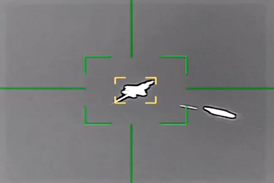
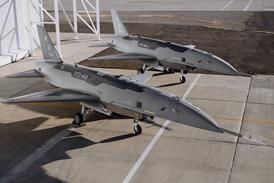
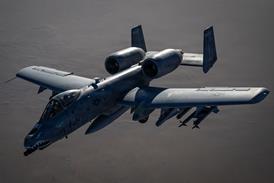














The worldwide shift towards Collaborative Combat Aircraft (CCAs) is under way.
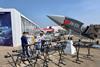
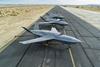
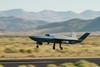
From the USA’s Kratos XQ-58A Valkyrie and Australia’s Boeing MQ-28 Ghost Bat to the UK’s Tekever/Leonardo StormShroud or aircraft carrier-based Project Vanquish and Turkey’s Bakyar Kizilelma, along with China’s GJ-11 Sharp Sword, new classes of autonomous “wingmen” are being developed.
However, the belief that these new systems, along with the combat air doctrines of olden times – which are still used for ‘legacy’ equipment – can be employed in combination is a dangerous assumption.
The greatest threat to CCA programmes is not a failure of the equipment, but of the relevant operational doctrines.
The most common assumption underlying the growing interest in CCA programmes (the earlier “loyal wingman” idea is a conceptual dead-end) assumes that unmanned combat air vehicles (UCAVs) will be of less tactical value than a mature piloted system.
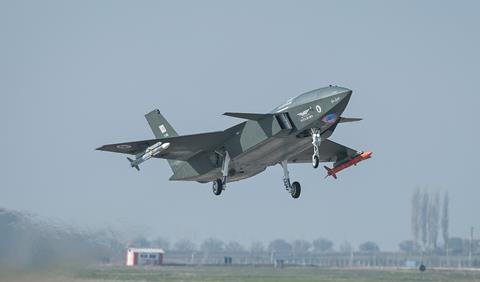
This constructs a vision of the piloted combat system being a “quarterback” in a manned-unmanned teaming (MUM-T) set-up, supported by a number of ‘attritable’ wingmen. But that represents an evolutionary rather than revolutionary vision of combat air systems, which is problematic because it assumes that the legacy system is adequate to capture the disruptive future capabilities envisioned.
For CCAs to work, a new doctrine integrating next-generation systems is needed from air forces around the primary functions of cognitive command, regenerative logistics and redefined human roles.
To begin with, command and control needs to change from a centralised model to one based on mission command of “autonomous collectives”. Legacy systems and frameworks will quickly fall behind the pace and complexity of disparate CCA swarms.
A novel doctrine that allows human operators to command intent – establishing strategy and engagement parameters – while the swarm’s artificial intelligence carries out the tactical shifts is needed.
The operational brain for such a change-in-command at scale is currently lacking, although programmes like the US Defense Advanced Research Projects Agency’s air combat evolution activity are building the algorithmic intelligence for this purpose.
Successful implementation of such a paradigm will require low-latency, secure and highly resilient networks, likely based on hacking-resistant quantum key distribution-centric communications.
Secondly, the acceptance of attrition requires a revolution in regenerative logistics and supply chain, dictated by the awareness that “losses are a part of the game”.
ATTRITABLE FLEETS
The philosophy and business model built out of maintaining small fleets of high-value assets will collapse under the impact of CCA operations. New doctrine must formalise concepts for: AI-driven predictive maintenance, autonomous recovery and repair; additive manufacturing (3D printing), also to be incorporated in a forward-deployed system; and large, attritable fleets.
Without such a new doctrinal backbone, the very first high-intensity engagement would leave a large CCA force combat-ineffective, even with numerous systems held in reserve.
Finally, and most importantly, the role of the airman must change. He/she must transition from being a mere pilot to ‘swarm commander’: a professional who has a unique skillset in human-machine teaming, data fusion from distributed sensors, and is an ethical oversight ‘kill-switch’ for autonomous systems, if required.
All of this requires a significant cultural change in air forces, from single pilot and individual mastery to collective cognitive management. So the training paradigms and pipelines must be redesigned to foster such new competencies.
This imperative is not lost on global competitors. China’s air force, for example, makes no secret of its heavy investments into AI and swarm doctrine and tactics.
Turkey, meanwhile, is advancing its Kizilelma UCAV, along with the Turkish Aerospace (TAI) Anka III, both of which are intended for integration alongside TAI’s Kaan fighter. That demonstrates a vision of networked autonomous co-operation.
Parity in technology without advancement in doctrine is futile. This is why air forces must set up permanent CCA doctrine and wargaming cells to create, test and refine new operational concepts.
In addition, they should conduct large-scale exercises which focus on practical challenges concerning the swarm supply chain and test the human decision-making-loop at the speed of a machine.
The CCA is still a prototype, and the vision is for an autonomous combat cloud: a synergistic, adaptive, MUM-T hybrid.
Whichever air force leads the way in establishing the doctrine to dominate this arena will dictate the future of aerial warfare. By contrast, those militaries that simply buy and field CCAs will be operating costly, irrelevant relics in a war that they are doctrinally unfit to fight.
Fahad ibne Masood is a strategic advisor and defence analyst specialising in next generation technology integration with air power doctrine, and the assimilation of disruptive technologies into military operations. A former fighter pilot, he is based in Riyadh, Saudi Arabia.