














Israel and the US have achieved spectacular successes in the air war against Iran, but already the limitations of raw airpower are apparent.
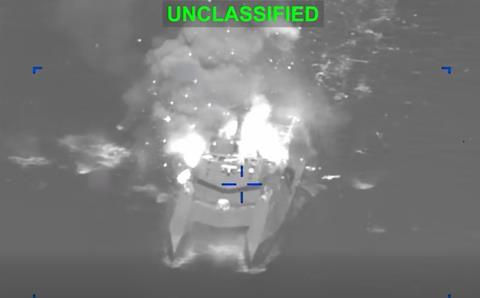
As of 12 March, the Pentagon’s statistics for its Operation Epic Fury were stupendous: 6,000 targets struck, with over 90 Iranian ships destroyed or damaged. Central Command, which is leading the war effort, lists 13 types of targets being hit, ranging from Iranian command and control locations to minelaying vessels.
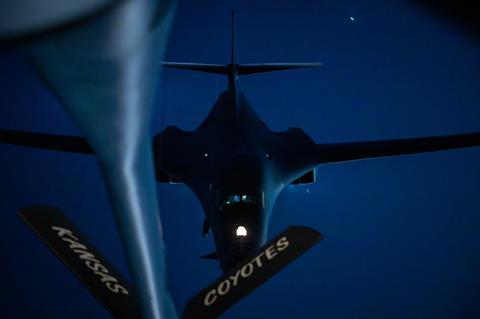
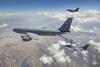
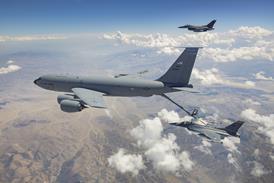
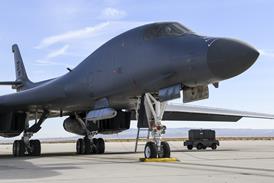
Virtually every key American combat aircraft type is involved, including all three US Air Force (USAF) bomber types. Even the Fairchild Republic A-10 ground-attack jet is in on the action. Israel, meanwhile, has deployed most of its air force in the effort – which it dubs Roaring Lion – with ample support from US tankers.
Though a clear display of the capabilities of American and Israeli airpower, the campaign lacks clear objectives, with the White House cycling through various rationales since 28 February, when Epic Fury was launched. Supposed objectives include regime change, dismantling Iran’s nuclear programme, destroying its ballistic missile production capabilities, and freedom of navigation.
On the first count, early strikes killed Ayatollah Ali Khamenei, Iran’s repressive leader at the outset of the conflict. In response, hardliners replaced Khamenei with his son, Mojtaba Khamenei, who is understood to have no love for the USA.
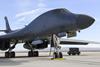
Iran’s nuclear programme, long an existential concern for Israel, was supposedly destroyed by Israel’s June 2025 air campaign. The final flourish of this was the Midnight Hammer mission conducted by USAF Northrop Grumman B-2 bombers on three locations.
After the mission US President Donald Trump declared that the enrichment facilities at Fordow, Natanz and Isfahan had been “completely and totally obliterated”. Nonetheless, one rationale given for Epic Fury has been Iran’s continued quest to develop a nuclear weapon.
As for missiles, Tehran had worked tirelessly to deploy a large and increasingly accurate ballistic missile force. On this count Epic Fury has arguably been its most successful: Iran no longer fires large, coordinated missile salvoes, but has been reduced to intermittent launches by decentralised forces.
On freedom of navigation, ironically, the Strait of Hormuz is all but entirely shut owing to Iran’s threats against passage through the key waterway. Given the importance of the strait for the transport of oil and natural gas, global energy prices have risen dramatically, creating concerns about an economic downturn.
Tehran’s leadership, which likely has growing competence at dodging air strikes, clearly sees that its main strategic advantage lies in control of the strait. Reports suggest that Washington may not even have considered the possibility that Iran may close the strait in a war that Trump has referred to as a “short-term excursion”.
Trump’s unfortunate phrasing belies the long, dreary catalogue of wars that started off as short, sharp offensives and ended up as quagmires. In many conflicts, airpower was seen as a key early advantage that would ensure a decisive, fast victory, but the enemy’s ability to adapt and recover led to long, drawn-out conflicts.
In the Second World War, early aerial successes by Germany and Japan boosted confidence, but eventually faded in the face of determined enemies. The USA had massive airpower advantages in both the Korean and Vietnam Wars, but ended up with poor results in both conflicts.
Airpower was critical in the USA’s early successes against Afghanistan in 2001 and Iraq in 2003, but after years of conflict Washington was forced to retreat from both countries.
Trump has called for Tehran’s unconditional surrender, but it is far from clear what he means. Meanwhile, Iran’s hardliners remain firmly in charge and show no sign of capitulation.
The Strait of Hormuz has therefore become the linchpin on which the conflict turns. The terrain on Iran’s side is inhospitable and rugged, with the foothills of the Zagros Mountains rising dramatically from sea level adjacent to the strait, which is just 21 miles wide.
The terrain allows for the concealment and dispersal of Iranian forces. Small teams can emerge from tunnels and caves, launch short-range strikes at shipping in the strait, and quickly hide.
The use of rugged, mountainous terrain in an asymmetric campaign reflects Houthi strikes against Red Sea shipping in 2025. The USA attempted to crush the Houthi threat with airpower alone, but ultimately Trump was forced to order a withdrawal – though he passed it off as an American victory.
Against dubious successes, the Houthi campaign saw the loss of three US Navy (USN) Boeing F/A-18E/F Super Hornets that stemmed indirectly from Houthi action. Two jets were shot down by friendly fire from a USN cruiser, the third rolled off USS Harry Truman when the aircraft carrier made a sharp turn, apparently evading a Houthi drone.
However impressive, the capabilities of the Houthis are likely a shadow of Iran’s around the Strait of Hormuz, which Tehran has had decades to fortify and prepare. Moreover, as the chief sponsor of the Houthis Tehran gained insights in how to seal off a waterway in the face of American airpower.
In a fight over the Strait of Hormuz American airpower will certainly be able to score tactical victories, but it will not be able to stop every drone or missile launch. Moreover, Tehran does not need to sink every ship that attempts to traverse the strait. Rather, bluster and the occasional strike against a passing tanker will cow skittish shippers and insurance companies.
Even a full-time US no-fly zone over the vast distances of Southern Iran will not be able to prevent periodic strikes.
Moreover, Iranian strike capabilities in the strait could improve, possibly with the help of Moscow. Russian leader Vladimir Putin is perhaps the single biggest beneficiary of Epic Fury. Rising oil prices and Trump’s inclinations to ease sanctions against Russian oil give him a welcome financial lifeline in his war against Ukraine.
From a military perspective, Putin benefits from the vast expenditure of US-made PAC-3 Patriot missiles by Gulf states against Iranian attacks. Some estimates put PAC-3 expenditure in Epic Fury at over 2,000 rounds. These stocks will need to be replaced, likely at the expense of Ukraine’s desperate defence of its cities against Russian missile attack.
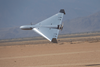
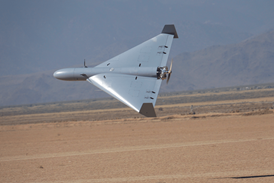
Putin can also provide more direct support by providing Geran-1 and Geran-2 drones, which are based on Iran’s own Hesa Shahed-136. Moscow has scaled production of these low-cost weapons for use against Ukraine and could ship them direct to Iran across the Caspian Sea.
While the global reach of US airpower can surely reach the Caspian, it is unlikely Trump would risk interdicting Russian freighters.
A resurgent Tehran could use Russian-supplied drones against ships in the Strait of Hormuz and civilian infrastructure in the Gulf states. A 16 March Iranian drone strike at Dubai airport shows it does not take much to shut down key Persian Gulf airline hubs.
The disconnect between tactical brilliance and an emerging strategic stalemate in this conflict suggests that the use of airpower will face diminishing returns as Iran evolves its response.
The opening hours of Epic Fury proved that coordinated, high-end strikes can dismantle a formal military architecture and decapitate leadership with surgical precision, but as the conflict evolves it will turn into a brawl between low-cost drones launched from mountain hideouts and costly US airpower.
The US and Israel have shown – yet again – that airpower can win the opening stages of a conflict, but that the enemy can adapt.