









The CF6 engine’s entry into service in 1971, powering the McDonnell Douglas DC-10, heralded the then-General Electric’s first major foray into the commercial market and a new era for long-haul air travel.
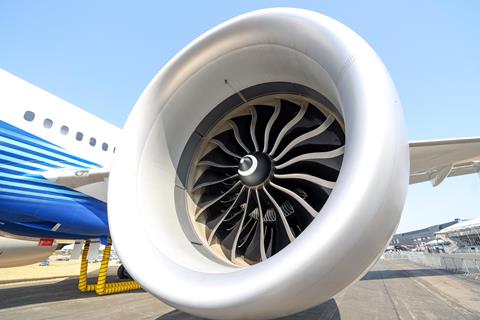
Fifty-five years on, GE Aerospace is behind much of the propulsion technology that is shaping the airline industry’s future.
Today, engine development is being shaped by requirements for greater safety, durability and efficiency, as airlines seek longer time on wing, lower fuel burn and reduced emissions. GE Aerospace is applying these priorities across its portfolio, spanning in-service programmes and longer-term technology development.
One outcome of this approach is the GE9X, which received US Federal Aviation Administration certification in 2020 for the Boeing 777X, and is currently undergoing certification flight testing.
Some of Asia-Pacific’s biggest airline names, including All Nippon Airways, Cathay Pacific, China Airlines, Korean Air, and Singapore Airlines, have orders for what is GE Aerospace’s most powerful engine yet.
The GE9X offers double-digit fuel burn improvement compared to its predecessor, the GE90, which helped redefine long-range, twin-engine operations when it entered service in the mid-1990s. Since then, more than 3,000 GE90s have been delivered.
One of the drivers behind the design of the GE9X is a desire by GE Aerospace engineers to increase its durability in the hot, humid, and dusty conditions many airlines operate in. The GE9X has undergone more than 30,000 test cycles to date, including around 9,000 endurance cycles and 1,600 dust ingestion cycles, making it the most extensively tested engine programme undertaken by GE Aerospace. The testing has helped to validate hardware and new materials, including ceramic matrix composite components and additively manufactured metal parts, under increasingly harsh conditions.
Meanwhile, CFM International, a 50-50 joint company between GE Aerospace and Safran Aircraft Engines, is looking to the future of narrowbody propulsion by accelerating progress on the CFM RISE technology programme. The initiative, unveiled in 2021, is the largest demonstrator programme the company has ever embarked on.
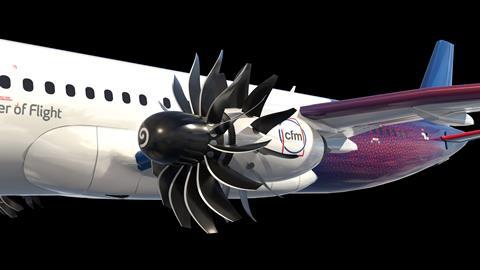
The initiative aims to improve durability and deliver fuel economies of at least 20% over today’s engines by deploying technologies such as Open Fan, compact core and hybrid electric capabilities.
So far, tests on the RISE programme’s next-generation high-pressure turbine (HPT) airfoils have demonstrated a “step-change improvement” in turbine component cooling technology. The HPT forms part of a more compact core GE Aerospace is developing for the RISE program.
Last year, GE Aerospace completed more than 3,000 cycles of endurance tests on HPT airfoil technologies and started the next phase of durability testing, beginning dust ingestion tests earlier than ever in new technology development.
At this year’s Singapore Airshow, the Civil Aviation Authority of Singapore, CFM International and Airbus announced an agreement to study the impact of Open Fan and other next-generation aviation technologies on airport operations.
The RISE-Changi project is the first airport partnership worldwide for the RISE programme and aims to validate the infrastructure and operational requirements for airports, airlines and maintenance, repair, and overhaul facilities to deploy innovative propulsion technologies such as those being developed for RISE.
The intention is that operators will gain early insight to speed adoption of these new technologies with a focus on safety, durability, and efficiency. Plans are to co-develop a comprehensive readiness framework to integrate Open Fan engines for the next generation of aircraft into existing airport operations, including aircraft system and design considerations, infrastructure modifications if any, operational procedure changes, safety standards, and regulatory procedures.
As it prepares for the introduction of the GE9X and for the future of flight with the RISE program, GE Aerospace’s unerring focus on its customers’ needs and improving its products will continue to impact the course of the industry, helping airlines deliver their performance, profitability, and efficiency aims.