














Airlines’ reputations flourish or fail by how they treat customers and their record in delivering safe and dependable products and services. Those in Asia-Pacific – where demand for air travel is increasing faster post-pandemic than anywhere in the world – are no exception.
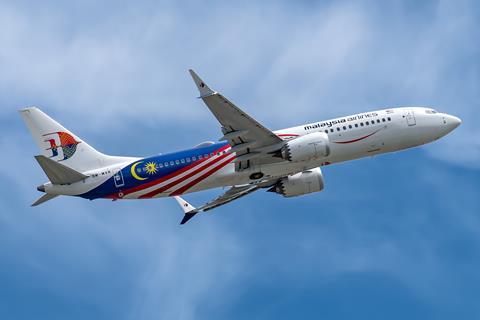
If present trends continue, the region’s carriers could account for close to half of all global capacity by the end of the decade. But with this growth spurt comes challenges, from the supply chain issues that have slowed OEM deliveries to pilot shortages and airport infrastructure struggling to keep up.
Perhaps the most critical factor for any airline in supporting schedule resilience and operational profitability is the reliability of the aircraft themselves – and particularly their propulsion systems.
Airlines need engines to be durable and deliver on their manufacturer’s promise when it comes to performance, especially in the hot, humid, or dusty environments many Asia-Pacific carriers regularly operate in.
This is doubly true in an era when supply chain challenges have forced carriers – including those in this region – to rely on existing fleets to support their operations over a longer period than originally intended.
Across the Asia-Pacific fleet, GE Aerospace’s newest engines in service – the GEnx on the Boeing 787 and the CFM International* LEAP on the newest -generation Boeing 737 and Airbus A320 families – are delivering better reliability trends than the global average.
At the same time, airlines in the region also depend on the endurance of legacy types including the GE90 on the 777 and the CFM56, which powers current variants of the 737 as well as the A320ceo family.
One of the most prominent GEnx operators in the region is Japan Airlines (JAL), which has been flying GEnx-powered Boeing Dreamliners since taking delivery of its first 787-8 in 2012. The airline, which was one of the first to order the GEnx, cites the engine’s role in underpinning day-to-day operations. “At Japan Airlines, every flight is a commitment to safety and reliability for our customers,” says Takashi Hamamoto, executive officer and senior vice-president at the airline and president of JAL Engineering.
“The GEnx-powered 787 has been an important part of our fleet, supporting long-haul and domestic operations with high time on wing and predictable maintenance planning.”
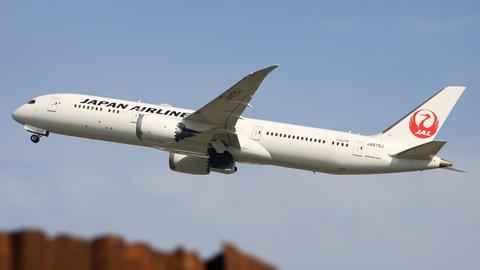
He continues: “As our 787 fleet continues to grow, consistent engine performance – combined with close collaboration and responsive support from GE Aerospace – gives us confidence in maintaining reliable, efficient, and sustainable operations over the long term.”
In October, GE Aerospace announced that its GEnx had surpassed five million flight hours with JAL and its fellow Japanese carriers All Nippon Airlines (ANA) and Nippon Cargo Airlines (NCA). In total, the engine powers a fleet of 68 aircraft across the country, with another 42 on order.
ANA selected the GEnx in 2020 to power its incoming Dreamliners, while NCA is among a handful of carriers operating Boeing 747-8 Freighters, which are also equipped with GEnx engine.
Globally, the GEnx engine has accumulated over 70 million flight hours since its introduction to service in 2011, with more than 3,600 engines in service and on order across the world. Around two-thirds of all 787s are currently powered by the GEnx.
In addition to its engine footprint, GE Aerospace supports Asia-Pacific operators through a regional service network that includes facilities in Singapore, Malaysia and South Korea. These sites play a role in helping airlines manage time on wing, turnaround times and overall engine availability.
There can be no hiding from the fact that the supply chain issues and labour shortages that have bedeviled the industry since the Covid-19 era have hit the MRO sector too. Airlines in the region, however, highlight an emphasis on joint problem-solving when tackling such constraints.
“Our working relationship with GE Aerospace can only be described as a partnership that is built on a platform of shared commitment to operational excellence,” says Bryan Foong, group chief strategy officer of Malaysia Aviation Group (MAG).
The Kuala Lumpur-based group began working with the manufacturer 50 years ago, when it took delivery of its first CF6-powered McDonnell Douglas DC-10, and the relationship expanded after MAG introduced Boeing 737s, powered by the CFM56 and the CFM LEAP-1B.
Foong notes that “the dynamic and ever-evolving nature of engine technology means there will always be room for discovery and improvements”, highlighting the importance of close collaboration between airlines and their suppliers.
Foong is emphatic about the role of dependable maintenance support. “In today’s airline landscape that demands flexibility and maximum asset utilization, reliability of our fleet is not just another statistic – it is a cornerstone of our product promise to our customers,” he says.
“Superior engine reliability serves not only to deliver a high-performing operation; it also supports efficient and predictable management of costs that gives us the resilience we need to navigate the airline through this highly volatile and competitive industry landscape.”
Taken together, the experience of carriers such as JAL, MAG underlines a common theme in the Asia-Pacific market: as fleets grow and networks expand, engine reliability, maintainability and support infrastructure remain central to sustaining the region’s rapid recovery and long-term growth.
*CFM International is a 50/50 joint company between GE Aerospace and Safran Aircraft Engines.