














Airlines operate in an environment of constant, multi-dimensional challenges that is characterised by thin margins and highly aggressive competition. Any revenue uplift is crucial, and new technologies enable airlines to unlock exactly that.

That is the view of Juan Pablo Lafosse, an air travel industry entrepreneur and former airline executive, who believes disruptive technologies can help the industry boost revenues and brand reputation through smart inventory management.
The RmX solution from TravelX, the company he founded and runs, leverages artificial intelligence to help airlines free up seats on busy flights for their most valuable customers – mostly business travelers who need to travel at short notice and are prepared to pay a premium.
RmX does this by identifying lower-yielding – and likely more flexible – passengers and offering them incentives to switch to less in-demand flights. On most departures, there will be those who will be delighted with a credit voucher or alternative flight option to extend or delay their trip.
Not only does this increase yield – the higher fare the premium passenger pays more than offsets the cost of compensating the traveler who makes way – it enhances customer satisfaction. Both parties involved feel the airline has been their friend.
In addition, a carrier that always has a seat for its most valuable customers is “extremely powerful”, asserts Lafosse. “The tangible result is the impact on revenue, but the intangible benefit is how it engenders loyalty.”
Of course, coming up with ways to maximise revenue from limited seats while keeping the most important passengers satisfied is nothing new. We have all been at a departure gate when staff at the last moment ask for volunteers to give up their seats on an oversubscribed flight in return for an incentive.
RmX’s difference is that it does this seamlessly, behind the scenes, and way before the huddle at the gate. It uses automation linked to the airline’s proprietary inventory platform to identify and contact those passengers most likely to be prepared to accept an alternative offer.
Lafosse describes it as a shift from static to dynamic post-booking inventory management that allows for upselling, seat upgrading, and flight swapping, without disrupting the core infrastructure of an airline.
Not only that, but it is a highly cost-effective way of solving a problem faced by any airline attempting to run a tight revenue management operation. “It’s the solution with the highest return on investment in the industry,” says Lafosse.
“The airline gets a lot of value with very little investment. We take care of all the integration efforts. It’s a way of adding anything up to 1,5% to revenues without deploying many resources,” he continues. “It’s a no-brainer.”
Lafosse’s experience in the aviation sector as well as adjacent markets drove home one thing: airlines are often hamstrung with legacy systems and struggle to adopt the cutting-edge technologies that can transform their businesses.
Lafosse launched his first travel agency business, aged just 20, while at university in the 1990s. It went on to become the biggest in his native Argentina, with outlets in the USA and other Latin American markets. With the internet, a novel technology, it was the first in the region to offer online retailing.
A hotel chain followed, which he sold in 2010, and another travel company, Almundo, that he divested in 2019 for $75 million. In total, he has invested, directly, or indirectly, in more than 80 tech companies.
The self-confessed “av geek” served as chief operating officer of flag-carrier Aerolineas Argentinas between 2009 and 2013, where he spearheaded a transformation plan that saw the airline triple its revenues and join the SkyTeam alliance.
“The aviation industry is huge, but it has a lot of challenges when it comes to technology. That’s why we founded TravelX, to help airlines leverage some of that innovation,” he says.
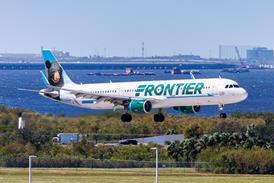
Lafosse maintains RmX has gained “a lot of traction with different types of airlines”, with GOL, AirAsia, Viva Aerobus, Flybondi, Spirit Airlines, Scoot and Volaris among those using the solution.
While current customers are weighed towards low-cost, narrowbody operators – as “they tend to be the early adopters of new technology” – the opportunities are even higher on multi-cabin aircraft, emphasizes Lafosse, as “you can run RmX in each cabin separately”.
The TravelX team comprises tech experts and those from an airline background, such as chief commercial officer, Brent Overbeek, former chief revenue officer with Hawaiian Airlines.
“Aviation is a complex industry where it is vital to realize how it works, so we are building a culture with both types of people,” explains Lafosse.
Meanwhile, Lafosse is looking beyond inventory management as TravelX matures its predictive modeling. “Our understanding of passenger behaviour will allow us to develop other solutions based on the value we are providing with RmX,” he says.
Discover how the RmX solution from TravelX can boost your revenues here.