



















In today’s ultra-competitive aviation industry, in which every dollar matters, a fast-growing technology innovator is offering airlines the chance to boost seat revenue on high-demand flights, even those that are fully booked.

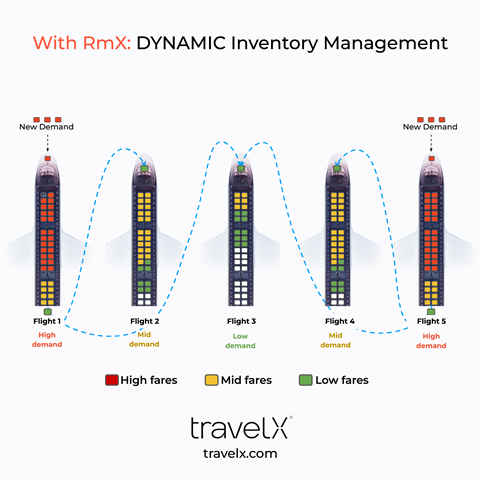
TravelX’s revolutionary RmX solution uses machine learning and predictive algorithms to manage what the company calls the “post-booking revenue management”. It identifies lower-yielding passengers on high-demand flights and offers them incentives to move to other flights.
This frees up seats for last-minute customers, enabling airlines to maximize the revenue potential of a flight without the risk of departing with empty seats.
TravelX’s “everybody wins” mantra means all parties involved benefit: passengers are incentivised for flexibility; last-minute travelers can access flights that might otherwise be sold out; and airlines always have a seat available for the most valued customer.
The company’s growing roster of airlines across key markets benefits not only from the increased revenues from those high-yield customers but also reputationally, as satisfied passengers welcome their airline’s flexibility. What is more, TravelX offers its service at almost zero risk to airlines due to its revenue-sharing model, explains chief commercial officer Brent Overbeek.
Overbeek, who is an airline veteran and former chief revenue officer of Hawaiian Airlines, believes: “TravelX is a unique company at an interesting time for the industry, which brings the most disruptive technologies that are driven by a team with deep sector expertise and decades of experience in airline revenue management.”
So what does RmX offer that an airline’s seasoned revenue management team working with their own trusted systems cannot? “What I’ve learned in this industry is that whatever you invest in people, processes, and technology, you can never quite get it perfect,” says Overbeek, who has also had stints at American Airlines and Etihad Airways.
“That’s where RmX comes in – identifying those flights where you have maybe missed an opportunity. It’s not a primary revenue tool, but it’s solving a problem in those last couple of weeks prior to departure, where adding another two to four percent of revenue can be crucial on full flights,” he adds.
“It allows carriers to take a bit more risk, knowing they can rely on our solution closer to departure,” he continues. “Yes, it removes some of the risk of denied boarding, but the real value of RmX is its ability to take back inventory and put it back on the market at higher prices.”
Another advantage is that the ‘white label’ aspect of RmX means it sits within the airline’s proprietary booking platform and branded environment. This way, passengers experience that they are interacting directly with the airline, says Overbeek.
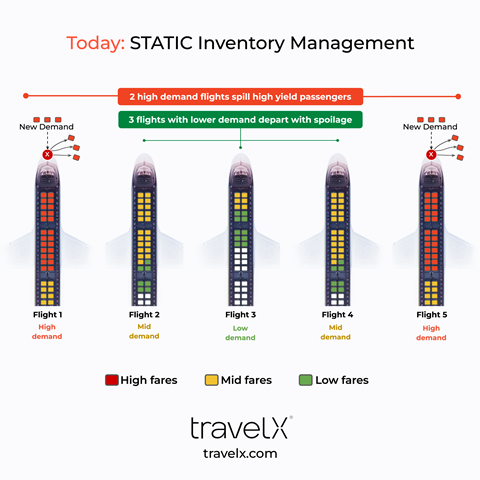
TravelX’s model is also not reliant on shifting large numbers of passengers from one flight to another. “Even if we are reallocating just four or six passengers from a flight, that is potentially creating quality revenue for the airline, because 95% of the time the airline resells that seat,” he says.
He stresses that each relationship is a “partnership”. “It means that our interests and those of the airline are aligned. As airlines are in need of risk-free solutions, we only win when the airline wins. The better results we are getting, the better results they are getting,” he says.
Overbeek also emphasises RmX’s simplicity. “We’ve got to be light touch for an airline. It shouldn’t be a giant project that needs a year of planning to get into your budget cycle. RmX is something you can implement with little resources in as short a timeline as 6 to 8 weeks, which helps the airline’s bottom line by the next quarter,” he says.
Since the launch of RmX last year, TravelX has begun working with leading low-cost and hybrid operators in Latin America and Asia. However, Overbeek says TravelX is “widening its net to the full-service segment and having conversations with some of the leading airlines in the world”.
TravelX is now looking at launching complementary services that could “solve even bigger problems in the revenue management space”. Overbeek concludes: “I’m really excited about what the next months hold and how we are taking great strides in redefining travel through dynamic inventory management.”