















Airbus believes is will not be able to source additional CFM International Leap engines to offset a projected shortfall in Pratt & Whitney powerplants for the A320neo family.
The airframer’s chief executive, Guillaume Faury, expressed frustration at the situation during a full-year briefing on 19 February.
He says he is “not satisfied” with the “low level of volume” of engines to which Pratt & Whitney is committing for 2026, adding that it is “insufficient”.
Airbus wants to “enforce [its] contractual rights”, he says, and states that it has “initiated a process” in relation to contractual disputes, although he declines to elaborate.
Faury indicates that the airframer is facing the possibility of parking “gliders” – the term adopted for fully-built aircraft that are awaiting engines – over the course of this year, although he does not put a figure on the number of affected airframes.
Pratt & Whitney has been dealing with supply pressures arising from durability issues with the PW1100G engine – having to address both in-service powerplants while also maintaining engine deliveries to manufacturers.
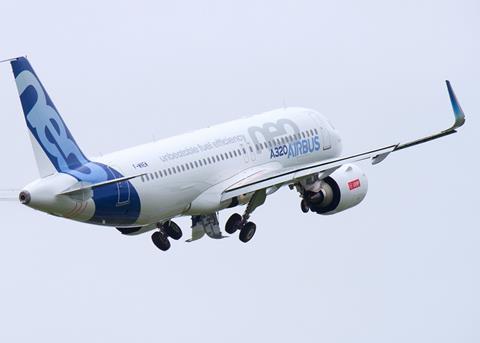
Airbus also experienced an delivery hold-up last year affecting supply of CFM International Leap-1A engines, the competing powerplant for the A320neo family.
But Faury points out that this was a short-term issue, the result of industrial challenges, which constrained supply for a few months until CFM caught up with its delivery schedule in November.
“That’s now behind us,” he says, adding that the Leap situation is “nominal” and Airbus expects to receive the number of engines to which CFM has committed.
He states, however, that CFM is unlikely to agree to a higher volume in the short term which might ease the production ramp-up problems.
“We’ve obviously [previously] discussed a lot with CFM on the possibility to get more engines,” says Faury.
“They’ve accepted already to increase the volume of Leap – they don’t want to [produce] more now for 2026 than what they’d accepted.”
Faury says CFM also has the challenge of managing support for the in-service fleet, which limits its ability to increase engine supply to Airbus beyond previously-agreed levels.
“That’s not something that will help, unfortunately, for 2026 – at least that’s not something CFM is ready to commit on now,” he states. “We’ll continue to have discussions with them as we move forward in the year.
“We’re managing production with the hope that we could improve the picture at a later stage. But I think CFM has been quite clear that 2026 comes with little hope.”
But he adds that Airbus is continuing to aim for a monthly A320neo production rate of 75 aircraft from the end of 2027, and leaves open the possibility that CFM could provide “a bit more” in 2027 compared with its previous commitment in order to support this objective.