














US lawmakers aim in December to advance a bill to permit overland civilian supersonic flight, saying the measure to overturn a longstanding ban has sufficient bipartisan support to pass both chambers of the US Congress.
“I feel very confident that [the bill] will be on the President’s desk… Everybody is onboard,” Republican congressman Troy Nehls, chair of the US House of Representatives’ aviation subcommittee, said on 19 November.
“I concur,” adds Democrat Sharice Davids, a committee member. The lawmakers spoke in Washington, DC at an aviation summit hosted my aerospace manufacturer Honeywell.
The Federal Aviation Administration banned civilian overland supersonic flight in 1973 out of concern about disruptions caused by sonic booms.
In May, Nehls introduced a bill that would eliminate the ban for aircraft “operated in such a manner that no sonic boom reaches the ground in the United States”.
A handful of US start-ups, including well-known Boom Supersonic, are working to develop supersonic passenger aircraft, including those with design and operational features intended to quiet sonic booms.
Colorado-based Boom has said the disturbance caused by its concept aircraft – called Overture – will not be audible on the ground owing to an effect known as Mach cut-out, whereby environmental conditions and the aircraft’s design keep the sound from reaching ground level.
The viability of such projects depend partly on the FAA eliminating the ban, which would widely open the US market to the start-ups. The companies face significant other challenges, including technical complexities, regulatory hurdles, market uncertainty and the need to secure the likely billions of dollars required to bring such yearslong projects to fruition.
Nehls expects the House committee will approve the bill in December and then send it to the full House, which he expects will also green light the measure before sending it to the Senate.
“I think we have the support over there,” Nehls adds of the Senate.
If approved by both chambers, the bill would land on President Donald Trump’s desk for his signature.
Nehls describes eliminating the supersonic ban as critical to ensuring China does not overtake the USA in the realm of supersonic technology, saying, “We are asleep at the wheel”.
He expresses confidence developers like Boom can build jets with minimal sonic booms.
“To think that grandma’s going to be having a cup of coffee in her kitchen, and that boom is going to come and break the window – it’s not happening. The boom isn’t going to hit the ground. The technology is there,” Nehls says.
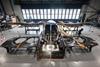
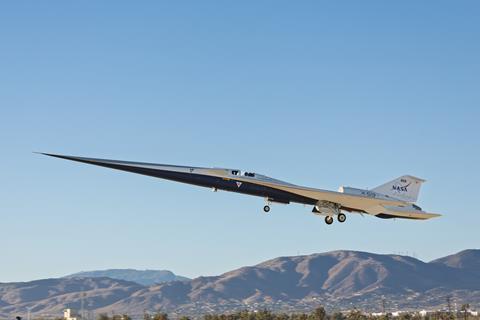
NASA is also studying quieter supersonic aircraft, having developed with Lockheed Martin the X-59 Quesst quiet-supersonic demonstrator.
The agency intends to use that jet, which the team flew for the first time on 28 October, to evaluate the effectiveness of the boom-muffling features.