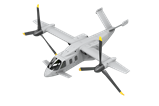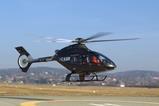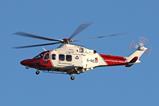
















Bristow Group will likely begin electric air taxi operations in the UK using a fleet of around five Vertical Aerospace Valo aircraft, as it builds out the network from 2029 onwards.
Vertical in December announced a partnership with Bristow and vertiport developer Skyports Infrastructure to launch the UK’s first air taxi routes between Canary Wharf – in the heart of London’s financial district – and Heathrow and Gatwick airports, plus Bicester, near Oxford, and Cambridge.
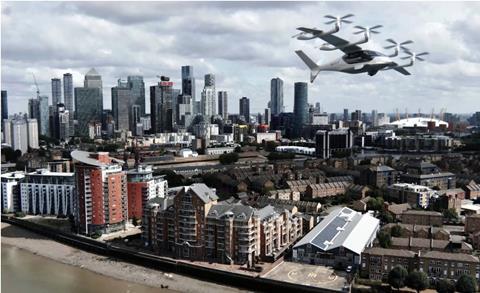
Dave Stepanek, Bristow chief transformation officer, says the company believes the proposed network will require around five of the four-seat Valo aircraft at launch, before growing.
“We think that network supports about 20 machines in the early days,” he says. “But you can’t start with one, and two is not enough.”
Vertical says the start of operations is due in the first quarter of 2029, although this will hinge on gaining certification for the newly-unveiled Valo, a milestone currently targeted in 2028.
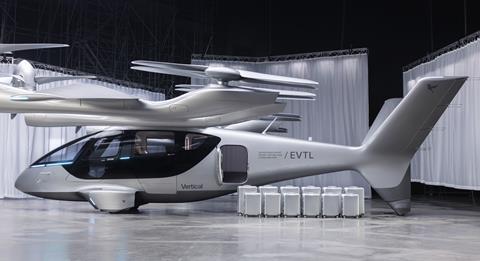
UK-headquartered Vertical revealed the Valo in early December as the aircraft it plans to bring to market, an evolution of its current VX4 prototype.
Last June, Bristow announced an expanded agreement for up to 50 of Vertical’s electric vertical take-off and landing (eVTOL) aircraft plus 50 options, as part of a deal to offer ‘ready to fly’ operations for existing Vertical customers.
Stepanek sees the planned London network as a natural extension of its existing offshore helicopter services, which are essentially offered on a wet-lease model.
Bristow also runs Airnorth, a regional carrier in Australia, providing the company with “some of the necessary intellectual property” for airline-type passenger operations.
But in most cases, Bristow “will be the air carrier, but we may not be the ticket-seller”, supporting other operators in “their desire to be more sufficient and sustainable”.
Conversations with multiple airlines in the Oneworld alliance have already taken place, he says, “and we hope to see something more mature in terms of a programme in 2026 with one of the mainline air carriers.”
Notably, Oneworld carrier American Airlines in 2022 placed a pre-delivery commitment for 50 VX4s, building on an agreement for up to 250 examples signed the previous year.
Bristow is also keen on the possibility of carrying out route-proving or operational trials with the Valo or VX4 in the UK, mirroring a similar set-up in Norway where it has been testing the Beta Technologies CX300, an all-electric conventional take-off and landing aircraft.
Stepanek says it is working with several UK government departments and executive agencies on the proposal.
“Even if we don’t have a full-bore business-to-commercial programme, we see some really interesting opportunities supporting our energy and search and rescue customers around the United Kingdom,” he says.
Stepanek acknowledges there are hurdles to overcome before any trials can kick off, including “getting the Civil Aviation Authority comfortable, as well as us comfortable, that we can take [the aircraft] into our system and operate it in an effective manner”.
However, the ongoing testing with Beta in Norway “has proven and demonstrated [our] ability to do that”, for example managing the insurance and contracting processes that support the testing.
Bristow is already part of a six-month project, launched in October, involving Vertical and Skyports, plus Oxfordshire County Council and air traffic management provider NATS, that includes demonstration flights with the VX4 along the so-called OxCam corridor from Skyports’ Bicester facility to Cambridge.
Vertical says the Valo’s design has been shaped by customer feedback, notably around the size of the passenger cabin and the baggage compartment capacity – claimed by the developer as the largest in the sector.
The latter feature is seen as crucial, says Stepanek, as passengers “are not going to put up with having to carry their bags into the cabin and take up seats or take up space, or having some alternate solution” for luggage.
Overall, Stepanek says he is “delighted” by the end result, not least that Vertical “listened to us, which is important”.
Although Vertical says the Valo will later be available with a six-passenger cabin, Stepanek does not consider it a priority. “I don’t plan on putting six people in it – we can make a commercial model work with four,” he says, calling it the “sweet spot”.