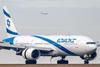












Israel’s competition regulator is set to rule that El Al set excessive fares while holding a monopoly on flights during the Gaza conflict.
El Al says it has been notified that the competition authority is considering a “financial sanction” of 121.8 million shekels ($39.2 million).
The airline adds that it “completely disagrees” with the finding and “believes that it acted lawfully”, a position it intends to present during hearing at which the ruling and any fine will be finalised.
According to the authority’s findings, El Al had a monopoly on flights to and from Israel from 7 October 2023 – when the Gaza conflict began – until the end of May 2024.
The conflict led foreign airlines to cancel services to Israel, reducing capacity, at a time when citizens were seeking to return to the country and travellers were trying to leave – and the authority warned the airline, in the first few days, that it should avoid exploiting the situation.
Analysis by the authority determined that, on the eve of the conflict, about 20% of passengers were booked with El Al, a figure which rose to more than 70% within a few days.
El Al had a monopoly at least on 38 of its 53 routes during the period under examination, the authority adds, and El Al flew more than half of all passengers to and from Israel over the first months of the conflict.
It also carried out “complex” before-and-after economic comparison of ticket prices, which indicates that typical fares increased by 6% to 31% – with an average rise of 16%.
The authority found a price increase of 25% on flights which departed with load factors below 85% in the economy-class cabin.
“This means that, even on flights that took off with empty seats, El Al raised the price,” it states.
The authority says the price rises were “excessive and unfair” and warrant an enforcement measure.
“Freedom of movement to enter and exit Israel is a fundamental right,” it adds. “Its realisation became extremely important in the circumstances of the war, even more so in the first months of the war.”
Although foreign carriers gradually started resuming service to Israel, passengers still tended to book with El Al owing to concern over possible flight cancellations at a time of uncertainty, says the authority: “Many consumers had no choice but to pay the prices charged by El Al.”