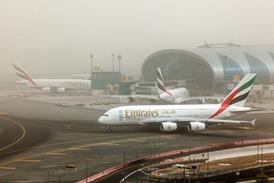












Dubai-based operators Emirates and Flydubai have resumed operating a “limited number of flights” following nearly three days of operational pause, and amid the prospect that the conflict in the Middle East could drag on for longer.
In an update late 2 March, Emirates states: ”We are accommodating customers with earlier bookings as a priority, and those who have been rebooked to travel on these limited flights will be contacted directly by Emirates.”
Flydubai, meanwhile, listed four Russian cities – Kazan, Yekaterinberg, Moscow Vnukovo, as well as Novosibirsk – that it will resume flights to.
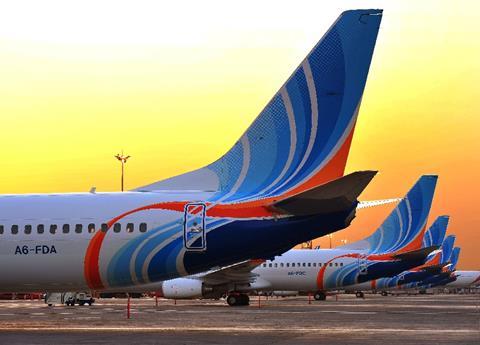
Five Flydubai flights are also scheduled to return to Dubai, including from Multan, Islamabad and Hargeisa.
The latest development comes as airport operator Dubai Airports, which operates Dubai International and Al Maktoum International airports, partially resumes operations.
A terminal at Dubai International was damaged on 28 February after Iran fired missiles at the UAE and neighbouring countries as retaliation for attacks by the USA and Israel.
The ongoing conflict, going into its fourth day, has upended air travel in the region, home to some of the world’s busiest airport hubs.
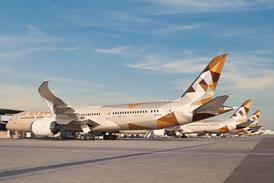
Other Gulf operators like Doha-based Qatar Airways and Abu Dhabi-based Etihad Airways said operations remain suspended through 3 March.
Airspace over Iraq, Kuwait, Bahrain, Syria and Qatar remain shut, with Jordan the newest Gulf country to close its airspace.
Airspace over Oman remains open, while airspace over the UAE is partially open.
Meanwhile, airlines globally continue to cancel flights to the Middle East, amid safety concerns and prolonged airspace closures.
Airlines are also dealing with the likelihood of increased fuel costs, with oil prices rising as much as 13% on 2 March when trading resumed.
According to news agency Reuters, travel-related shares – including airlines – shed $22.6 billion during trading on 2 March, reflecting the wider financial impact from the conflict.
Commenting on the impact of the conflict on the airline sector, IATA director general Willie Walsh says: “We all hope for an early peaceful resolution to the current hostilities. In the meantime, it is critical that states respect their obligation to keep civilians, and civil aviation free from harm.”
Meanwhile, Airports Council International (ACI) World, the global trade association for airports, says the conflict has brought “significant operational pressures” to airports in the Middle East.
“Airports are critical infrastructure and essential emergency lifelines, enabling connectivity, humanitarian support, and the movement of vital goods and people during times of crisis. We emphasise the importance of government support in the affected countries to help ensure the security of airport teams and the continuity and recovery of operations,” the council adds.