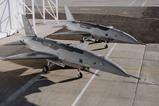














Saudi Arabia is eyeing further updates to its large fleet of F-15 combat aircraft, with Boeing seeing strong potential for new upgrades – or even an order for its “latest and greatest” EX-model version.
“We are currently talking with the Royal Saudi Air Force [RSAF] about the F-15EX,” says Vince Logsdon, vice-president, international business development at Boeing Defense, Space & Security. “We are looking at potential upgrades to the SA aircraft, and potential new-buys as well.”

The RSAF operates the second-largest fleet of F-15s in the world, behind only the US Air Force, with 232 examples in use, according to aviation analytics company Cirium. That total includes around 150 SA- and SR-model jets, with the latter standard having already been modified from the earlier F-15S guise.
The remainder of its examples are legacy C/D-version fighters, aged up to 45 years.
Speaking at the World Defense Show near Riyadh on 9 February, Logsdon said the RSAF could be interested in upgrading in-service assets. “That would take those aircraft up to an EX capability,” he says.
Such an activity could include the integration of the Raytheon APG-82 active electronically scanned array radar, large area displays in the cockpit and an enhanced electronic warfare system.
“The customer now is looking at multiple solutions based on the existing fleet,” says Boeing Saudi Arabia president Asaad AlJomoai. “[As to] which ones are going to be upgraded, there are multiple buckets of what will be selected from the customer side,” he adds.
He notes that while Boeing continues to monitor the RSAF’s ambitions around a new fighter buy, “the viable option that we are looking at is the upgrade”.
The US Defense Security Cooperation Agency earlier this month outlined a potentially $3 billion package of in-service support for the RSAF’s current F-15 fleet.
The F-15EX Eagle II was among multiple candidates for a possible future purchase, along with the Dassault Aviation Rafale and Eurofighter Typhoon, while Riyadh also has looked at the in-development Korea Aerospace Industries KF-21 and Turkish Aerospace Kaan.