












Pratt & Whitney (P&W) machinists in Connecticut are on strike after voting down a proposed employment deal, further disrupting the engine maker’s operation as it works to increase production and address a massive engine recall.
Some 3,000 workers represented by the International Association of Machinists and Aerospace Workers (IAM) – the same labour group that organised stoppages last year at Boeing and Textron Aviation – are now on strike, the union confirms.
The move comes after workers rejected a contract offer from P&W because the terms “failed to adequately address the membership’s top concerns about wage and retirement security and offered nothing to improve job security”, the IAM adds.
The union’s existing contract with the engine maker expired end-of-day on 4 May. The strike began on 5 May.
“We have no immediate plans to resume negotiations at this time and we have contingency plans in place to maintain operations and to meet our customer commitments,” P&W says, without elaborating.
The striking employees work at P&W facilities in East Hartford and Middletown and are represented by IAM’s Local 1746 and Local 700 divisions, respectively.
The 3,000 striking workers represent 27% of P&W’s 11,000 employees in Connecticut.
“The company simply failed to bring to the table an agreement that we felt comfortable recommending to our membership,” says IAM representative Jeff Santini.
P&W challenges that assertion, however. “Pratt & Whitney’s offer competitively compensates our workforce while ensuring P&W can grow in an increasingly competitive marketplace, creating ongoing economic opportunity in the state of Connecticut,” the company says.
“Our local workforce is among the highest compensated in the region and the industry – our offer built on that foundation.”
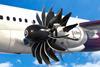
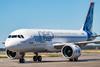
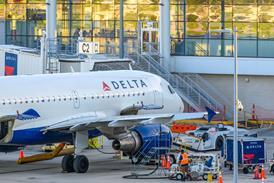
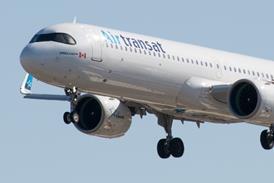
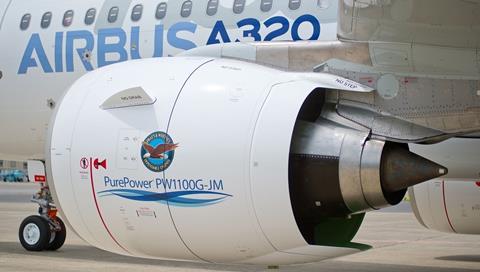
The labour action comes as the engine maker navigates the difficult process of overcoming quality problems affecting its PW1000G geared turbofans, which power Airbus A320neo-family jets, A220s and Embraer E-Jet E2-family aircraft.
P&W is working through a tremendously disruptive recall of those engines due to metallic components that could potentially fail earlier than planned, the result of defects introduced during manufacturing.
The recall requires that airlines ground jets for early inspections and part replacements. As a consequence, hundreds of PW1000G-powered jets have been out of service at any given time, significantly upsetting airline operations.
“IAM… looks forward to returning to the table with Pratt & Whitney’s leadership to continue pressing for the needs and enhancements that ensure the well-being and livelihoods of Pratt & Whitney workers,” the union says.