















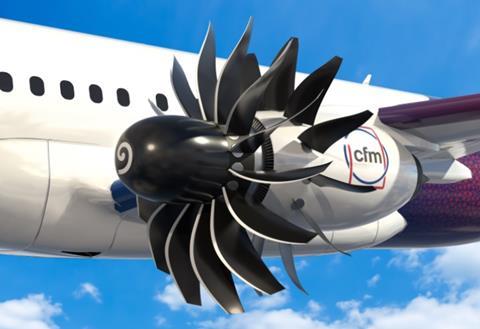
Safran has played down the significance of reports that its CFM International narrowbody joint venture with GE Aerospace is developing a ducted-fan alternative to the open-rotor architecture being matured through the RISE technology demonstrator programme.
Reuters on 12 February revealed the existence of a previously undisclosed project within Safran referred to as “Advanced Ducted-Large” – a project related to a more traditional engine architecture than proposed through RISE.
But briefing analysts on the French firm’s 2025 full-year performance on 13 February, Safran chief executive Olivier Andries said CFM was simply “getting prepared for any scenario” and that such a strategy should be “no surprise”.
“Yes, we are working on an open-fan architecture, but we need to be prepared for any architecture,” he says.
Acknowledging there are still “lots of challenges” to be overcome to bring an open-fan engine to market, Andries insists the CFM partners are “still very confident that the open-fan is the most rewarding configuration in terms of fuel burn”.
However, he points out that its customers will have the final say: “At the end of the day it is going to be an airframer decision to select a given engine architecture.”
CFM has long maintained that an open-fan engine will deliver better fuel-burn performance than a ducted alternative and is working with Airbus to flight test the RISE demonstrator in 2029.
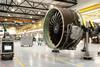
Although RISE is often seen as solely focused on demonstrating the viability of an open-fan design, Safran chief financial officer Pascal Bantegnie reiterates that it is “developing technology bricks” – new materials, hybridisation, and gearbox – that could be applied to any engine architecture.
Notwithstanding Airbus’s apparent enthusiasm – although the airframer insists it has not yet selected a powerplant for its A320neo-successor, the next-generation single-aisle (NGSA) – CFM’s strategy may be shaped by its other narrowbody customer, Boeing, which is thought to be reluctant to embrace the potential risks of an open-fan engine.
Rival Pratt & Whitney is proposing a next-generation version of its geared turbofan engine for the NGSA, while Rolls-Royce is working on a similar architecture through its UltraFan 30 demonstrator.
For Safran and CFM though, the shorter-term priority is the continued production ramp-up of its current Leap programme.
Last year, the joint venture delivered 1,802 Leap engines – an 18% increase on 2024 – and expects that figure to rise by another 15% in 2026, putting the delivery total at around 2,072 units.
Andries says output of more than 500 engines in each of 2025’s final two quarters “gives us increased confidence in delivering another 15% increase in 2026”.
It is forecasting to reach around 2,600 Leap deliveries by 2028 “supported by continued supply chain improvements and the ongoing execution of our resilience plan”.
This will support the ramp-up plans of Airbus and Boeing, who intend to raise output of their respective A320neo and 737 Max families in the coming years.
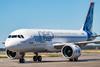
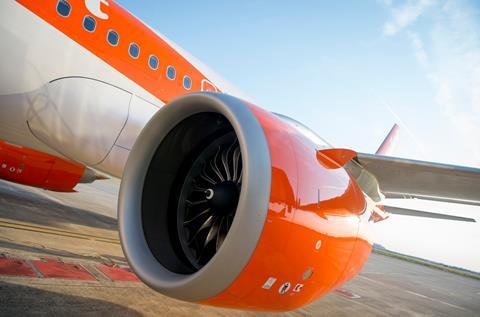
CFM supplies the Leap-1A as an option on the A320neo, while the -1B variant is the exclusive powerplant on the 737 Max.
Despite the Leap engine’s fuel-burn improvement over the previous-generation CFM56, customers have complained about poor hot section durability performance from the newer engines, particularly when flown in challenging operating environments such as hot and dusty conditions.
CFM has been working on a series of fixes for these issues, and Andries says more than 1,450 improved high-pressure turbine blades for the Leap-1A have now been produced, while 50% of the fleet now has a reverse-bleed system installed, reducing fuel nozzle coking and cutting the amount of on-wing maintenance required.
Certification for both enhancements on the Leap-1B is expected in the first half of 2026, which will “deliver the same durability improvements to 737 Max operators”, he adds.
Overall, 2025 was an “outstanding year” for Safran, Andries says, with revenue up 14.7% to €31.3 billion ($37 billion) and net income increasing by 3% to €3.1 billion.
Propulsion revenue grew by 17.6% to €15.6 billion, with recurring operating income at €3.6 billion. Safran’s equipment and defence unit saw a similarly strong performance, with revenue up 11.6% to €12.3 billion, and operating income at €1.5 billion.
There was even good news for the company’s serially underperforming interiors business unit, which saw revenue increase by 14.2% to €3.3 billion – a return to pre-Covid levels – and operating income grow fourfold to €108 million.
Bantegnie says the division “continued to make real progress on its turn-around” and achieved cash break-even during the year.