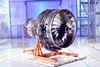















Rolls-Royce has revealed a new build standard for the Trent 1000 engine, the XE, which incorporates improved parts that will double time on wing, alongside inclusion of the manufacturer’s TotalCare support package.

An option on the Boeing 787, where it is offered against the GE Aerospace GEnx, the Trent 1000 has suffered from poor availability issues for a number of years, linked to premature degradation of certain parts, particularly high-pressure turbine (HPT) blades.

Trent 1000 XE landscape-c-Rolls-Royce

Source: Rolls-Royce

New Trent 1000 XE will significantly improve time-on-wing over previous versions of the 787-powering engine

US Federal Aviation Administration (FAA) certification for the first batch of redesigned components under the durability enhancement programme was achieved in the summer, although in anticipation of the approval, the manufacturer had begun incorporating them into new-build engines from the start of the year. 

European Union Aviation Safety Agency (EASA) clearance for the improved HPT blades was obtained in 2024.

Rolls-Royce says XE-standard engines – X is a nod to the preceding TEN model and E stands for enhanced – will “deliver a transformational benefit to our customers” against their “current experience of operating their Trent 1000 TEN-powered 787s”.

“The Trent 1000 XE marks a step-change in performance for our current and future customers,” says Rob Watson, president of civil aerospace, Rolls-Royce.

“We know that the same enhancements have already improved time-on-wing for the Trent 7000 and we are confident it will deliver for Trent 1000 customers.”

Key upgrades include new HPT blades – which see cooling increased by 40% – plus updates to the combustion system, fuel spray nozzles, and engine electronic controller software. Lufthansa is the first customer to receive a new XE engines, having taken delivery of a 787-9 (D-ABPT) in early November.

A second phase of improvements is planned to be introduced early next year, Rolls-Royce says, boosting time-on-wing by a further 30%.

These enhancements include advanced coatings on combustor tiles; HP nozzle guide vane film cooling changes; HPT blade weight reduction; and a Trent XWB-84-style combustor and turbine interface redesign. Coatings will also be “optimised” on the nozzle guide vanes and HPT blades.

Testing is ongoing and certification for the phase-two upgrades is expected in the first quarter of 2026.

Although roll-out of the first set of improved parts was held up by the need for flight testing to secure aircraft-level certification, Rolls-Royce says this will not be the case for the second phase.

This, it says, is classed as a “minor modification that does not require flight test”, giving it confidence in its first-quarter target.

“It is delegated from the FAA to EASA and while it does require Boeing approval, it has fewer variables,” it says.

As well being introduced on new-build engines, the phase one components are also being progressively installed on the in-service fleet.

Rolls-Royce maintains that all in-service Trent 1000 engines will have received the upgraded phase one parts within two years, with the roll-out to be completed during 2027.

Phase two upgrades will then be “installed on every engine at the earliest shop visit opportunity once that package becomes available.”

To meet that two-year target Rolls-Royce has increased supply chain output for the Trent 1000 – up 33% so far this year – and raised MRO capacity by one-quarter.

“We’re confident that these bold changes, coupled with our long-term investment plans, will provide continuous improvement for our customers,” it says.

“We aim to significantly increase MRO capacity across our global network for all Trent engines by 2030.”

Rolls-Royce has also taken the decision to include the TotalCare support package as standard with the XE “which provides cost and maintenance predictability”. This “coupled with the technology improvements, makes the Trent 1000 XE extremely competitive”, says the company.

The improvements for the Trent 1000 are part of a £1 billion ($1.3 billion) investment by the propulsion specialist to boost the durability and performance of its entire portfolio of in-production Trent engines.

This story has been modified to include detail of the first aircraft to receive the XE engines.