











A US federal bankruptcy judge has approved a deal under which International Aero Engines (IAE) will grant Spirit Airlines up to $140 million in credits as compensation for a Pratt & Whitney (P&W) engine recall that upended Spirit’s operations.
The deal also trims Spirit’s maintenance obligations, better aligning those costs with the recently reduced size of its fleet, Spirit says.
Judge Sean Lane with US Bankruptcy Court for the Southern District of New York approved the revised Spirit-IAE deal on 23 December. Spirit filed a heavily redacted copy of the agreement with the court earlier this month.
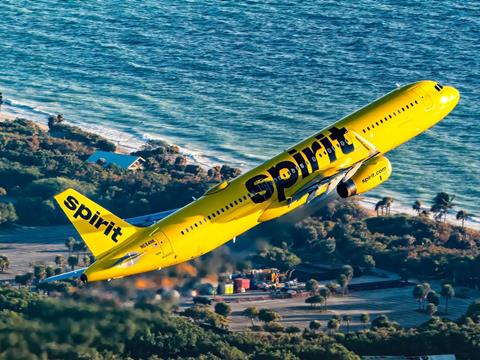
The credits will be held by IAE for Spirit’s use, and granted to the airline in tranches starting within days and continuing for several years, according to the judge’s order.
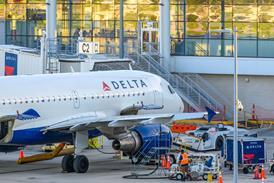
The agreement specifies that Spirit will continue divesting A320neo-family jets until it retains only 10-28 examples, powered by PW1100Gs. Spirit will continue flying at least 78 of the earlier-generation A320ceo-family jets, powered by IAE V2500 turbofans, the deal says.
Additionally, Spirit committed to retain at least six owned spare PW1100Gs.
IAE is the consortium that produces the PW1100G. It is owned by P&W, Japanese Aero Engines and MTU Aero Engines.
The “agreement with IAE… demonstrates meaningful progress in Spirit’s fleet and maintenance strategy. While redacted for commercial sensitivities, the agreement provides for significant reductions to the company’s maintenance obligations for 2026 and 2027 in line with its reduced fleet size,” Spirit says.
“We are pleased with the continued momentum in our Chapter 11 cases, and the willingness of virtually all of Spirit’s stakeholders to come to the table in support of our airline’s financial and operational future,” it adds.
Spirit filed for bankruptcy protection in 29 August – its second such filing within one year.
It has been working through numerous headwinds, including reduced demand for bargain-basement airfares.
But another prime stressor has been P&W’s recall of PW1100Gs, disclosed in 2023.
The engine maker recalled the powerplants globally because they can contain metallic components subject to early failure – the result of errors during a manufacturing process using powdered metal.
Spirit’s operation suffered immensely from the recall, which required it to ground dozens of jets for unexpected, lengthy engine maintenance.
Spirit’s turnaround plan involves significantly reducing the size of its fleet, mostly by divesting A320neos, while keeping A320ceos powered by V2500s.
At the start of this year, Spirit had 170 in-service A320-family jets and 43 in storage, according to fleet data provider Cirium.
It now has just 116 in-service jets, among them 78 A320/321ceos and just 38 A320/321neos, the data shows.
Spirit’s financial condition has been viewed as uncertain in recent weeks. The airline lost $47 million in November, though this month it secured $50 million in additional financing.