












Japan has protested the targeting of its aircraft by Chinese shipborne fighter aircraft with their radars.
The incidents occurred on 6 December, as the Chinese aircraft carrier CNS Liaoning conducted flight operations near the strategic Japanese island of Okinawa, according to statements from Japanese prime minister Sanae Takaichi and defence minister Shinjiro Koizumi.
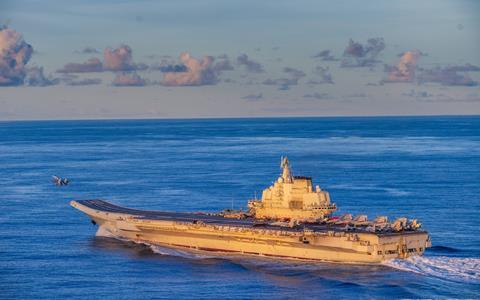
According to Japan’s defence ministry, fixed-wing aircraft and helicopters from Liaoning conducted about 50 sorties on both 6 and 7 December.
On 6 December, the ministry says a Kawasaki P-1 maritime patrol aircraft of the Japan Maritime Self-Defense Force (JMSDF) and a Japanese destroyer were dispatched to monitor Liaoning’s activities. Boeing F-15J fighters of the Japan Air Self-Defense Force were also scrambled against a possible intrusion of Japanese airspace.
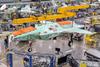
Reports from Japan, citing official sources, indicate that a Shenyang J-15 locked its radar onto an F-15J in the late afternoon of 6 December. Two hours later, in the early evening, another radar lock incident against an F-15J occurred.
Locking a radar onto another aircraft is viewed as a direct threat because it represents the final step in the targeting process before a missile launch. For this reason, militaries treat radar lock-ons as dangerous escalatory behavior that increases the risk of miscalculation and accidental conflict.
Japan has lodged a formal protest with China.
“Such actions go beyond what is necessary for safe flight and constitute dangerous behavior,” says Koizumi. “We lodged a strong protest with the Chinese side and firmly demanded measures to prevent such actions from occurring.”
Beijing’s foreign ministry blamed Japan for “deliberately shadowing and harassing our operations, repeatedly sending aircraft into the exercise zone that China has designated and publicly announced”.
The incidents come amid high tensions between Japan and China following remarks from Takaichi that Japan would likely intervene should China attempt to seize Taiwan, which neighbours both countries.
Chinese pilots have a long history of aggressive, dangerous behaviour against foreign military aircraft operating in international airspace. Generally, these involve fighters conducting close manoeuvres against patrol aircraft. In June, Japan protested close approaches by J-15s against a JMSDF Lockheed P-3C Orion.
A map provided by the Japanese defence ministry shows that Liaoning transited the strategic Miyako Strait before turning north for flight operations off Japan’s southwest islands, with activity on 7 December occurring roughly 103nm (190km) east of Kikai Island.