













Defence manufacturer Lockheed Martin has secured an additional $4.2 billion from the US government to increase the production of two crucial long-range precision missiles.
The 31 July contract adds more than $4 billion to an existing deal with Lockheed covering the production of the Joint Air-to-Surface Standoff Missile (JASSM) and Long Range Anti-Ship Missile (LRASM), bringing the total value of the order to over $9 billion.
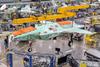
That massive plus-up comes more two years after Lockheed completed work on a second JASSM/LRASM factory line in Troy, Alabama. The company has invested significantly to increase production capacity for the two long-range munitions, after receiving assurances from the US government that new orders would follow.
“Increasing JASSM and LRASM production is essential for American and allied national security, and Lockheed Martin is ready to answer the call,” says Dave Berganini, Lockheed’s vice-president of hypersonic and strike systems.
“We are leveraging our advanced manufacturing capabilities and investing in our production facilities to quickly and affordably deliver these critical capabilities war fighters need to maintain a strategic edge and protect our nation from emerging threats,” he adds.
Lockheed declines to disclose its current production capacity for the two missile systems, which both use a common core.
The company has previously told FlightGlobal that each of the two JASSM/LRASM lines will eventually have the ability to deliver more than 500 missiles annually, with that quantity divided between the two types.
In 2024, a Lockheed official told FlightGlobal the Troy assembly lines were churning out 720 missiles per year, but could expand to 1,100 annually with firm orders from the Pentagon.
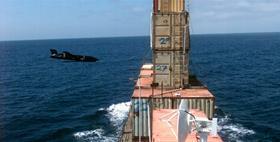
While that figure may seem high, the rate of expenditure in any high-end conflict is expected to outpace production capacity and rapidly deplete existing stocks.
Both of the subsonic munitions are seen as critical to the success of US forces in any conflict against a modern near-peer enemy, particularly the ship-killing LRASM.
A 2022 wargame from the Washington-based Center for Strategic and International Studies (CSIS) determined that the air-launched LRASM would be a decisive factor in fending off a cross-strait invasion of Taiwan by Chinese forces.
Just this month, the CSIS released a follow-on study examining a blockade scenario around Taiwan and how Washington’s various response options might play out.
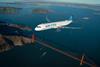
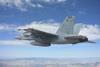
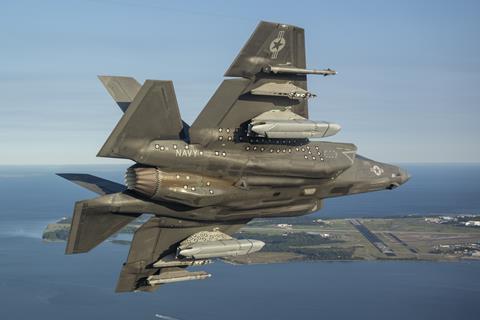
The LRASM is currently certificated for use with the US Air Force’s (USAF’s) Boeing B-1B supersonic bomber and US Navy’s Boeing F/A-18E/F Super Hornet carrier-based strike fighter. Work is ongoing to fully certificate the anti-ship missile with Lockheed’s F-35 stealth fighter and the Boeing P-8A maritime patrol jet.
The low-observable missile is known to have a range of at least 200nm (370km), with a newer variant increasing that to upwards of 500nm.
Lockheed confirms that the extended-range variant of the air-to-ground JASSM can reach distances beyond 500nm. That missile is certificated for use with all three of the USAF’s bomber types – including the stealthy Northrop Grumman B-2 – plus the Boeing F-15E and Lockheed F-16 fighters.
JASSM integration work on the F-35 is ongoing.
The Pentagon did not respond to a request for comment on the current JASSM/LRASM production rate.
Recent budget documents indicate US forces have been expending the complex munitions throughout recent conflicts in the Middle East, with the Pentagon now seeking to replenish those stocks.