
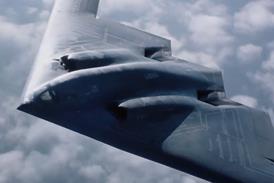














The US Marine Corps’ (USMC’s) 2026 aviation plan has detailed the force’s intentions for fixed-wing combat aircraft, including the pending retirement of the venerable Boeing AV-8B Harrier II.
The plan outlines a requirement for USMC aviation to be ready for combat while “aggressively modernising” for future threats.
It places an emphasis on safety and calls for the strict adherence to rules: historically, 30% of USMC aviation mishaps stem from noncompliance with procedures.
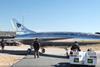
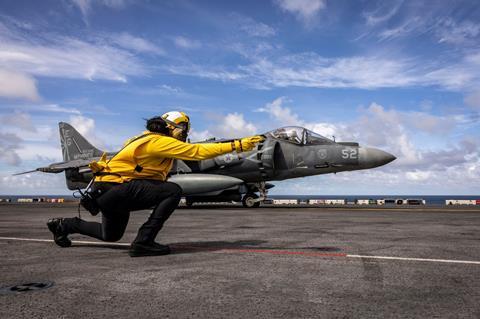
The USMC’s original short take-off and vertical landing (STOVL) aircraft, the Boeing AV-8B Harrier II, will depart operational service in 2026, with a “sundown ceremony and final flight” in June. Last year’s aviation plan indicated that the type would continue operating into 2027.
The USMC plan notes that the type is on its final deployment with VMA-223, embarked with the 22nd Marine Expeditionary Unit aboard the amphibious assault ship USS Iwo Jima.
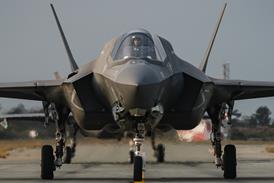
“As the Harrier era concludes, its highly experienced aircrew and maintenance personnel are transitioning their skills to other platforms, primarily the [Lockheed Martin] F-35B, ensuring their expertise continues to benefit Marine Corps Aviation.”
By the end of 2026, the USMC will have received 205 F-35Bs and 56 F-35Cs – the ‘B’ is STOVL version of the aircraft, while the ‘C’ is equipped to operate from US Navy aircraft carriers. Overall, the USMC programme of record calls for 420 F-35s.
A key priority is the integration of new weapons, such as the Small Diameter Bomb II, as well as the Lockheed AGM-158 series, which comprises the Joint Air-to-Surface Standoff Missile-Extended Range (JASSM-ER) and Long-Range Anti-Ship Missile (LRASM).
Work also continues with teaming collaborative combat aircraft with the F-35 under the MUX-TACAIR effort.
The USMC’s 128 upgraded Boeing F/A-18C/Ds will continue to play a role as the transition to the F-35 continues. The plan indicates that the type is set to depart the force after 2029.
“The aggressive, final fit modernisation programme increases survivability and lethality against both air and surface threats to enable the Hornet to continue executing assigned missions,” says the USMC plan.
In addition, 13 Northrop F-5s will continue to serve in the aggressor role, with this number to grow to 22 airframes with the arrival of upgraded jets that formerly served with the Swiss air force.
As the USMC’s F-35 fleet grows, demand for adversary sorties will grow. The USMC aims to replace the F-5s in the next 10-15 years under its “Adversary Next” effort.
In addition, the plan underlines the importance of the General Atomics Aeronautical Systems MQ-9A uncrewed air vehicle, particularly its role in supporting kill webs.
“The MQ-9A’s readiness, persistence, multi-spectrum sensing, and range, connected through digital networks, shape actions on the ground across the spectrum of conflict and directly benefit Marines with strategic results,” says the USMC plan.