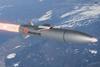













The US Navy (USN) is exploring the possibility of a new long-range, air-launched anti-radiation missile that can be used in contested environments.
In an on-line solicitation, the Naval Air Systems Command (NAVAIR) is looking for information about a possible Advanced Emission Suppression Missile (AESM).
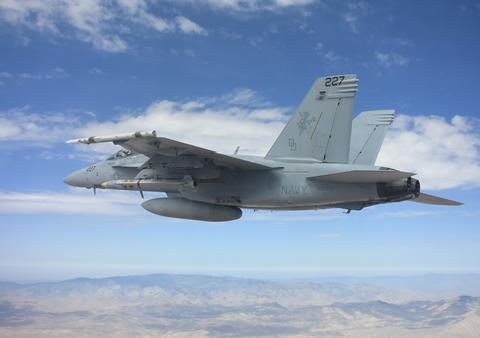
The weapon must be capable of “engaging targets at significant standoff distances”, and be compatible with USN types such as the Boeing F/A-18E/F Super Hornet, EA-18G Growler electronic warfare aircraft, and Lockheed Martin F-35.
The weapon’s seeker must have broad frequency coverage and the ability to target advanced radar systems, along with precision navigation capabilities. It must also be able to defeat a range of enemy countermeasures, including chaff, flares, and jamming.
Moreover, NAVAIR is asking about the missile’s ability to engage both airborne and ground targets.
The air-to-air stipulation likely reflects a concern about the proliferation of airborne early warning and control (AEW&C) aircraft with the Peoples’ Liberation Army Air Force. Beijing has invested in large numbers of the Xian KJ-500, as it also works to deploy the larger KJ-3000 and the aircraft carrier-based KJ-600.
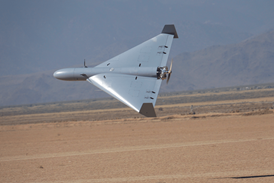
Moreover, China’s new Shenyang WZ-9 unmanned air vehicle serves in the AEW&C mission, with conformal active electronically scanned array radar panels.
The USN adds that the weapon needs to be ready in two years and that it expects to buy 300 units annually.
The solicitation comes as the USN transitions from Northrop Grumman’s AGM-88E Advanced Anti-Radiation Guided Missile (AARGM) to the higher-performance AGM-88G AARGM-Extended Range, which doubles the effective range and features a “straked” airframe designed for internal carriage on the F-35C.
Following a successful January 2026 live-fire test in a GPS-denied environment, the AARGM-ER is set for initial operational capability (IOC) later this year, providing USN aircraft with an enhanced ability to destroy advanced, relocatable integrated air defence systems.
Separately, NAVAIR has declared IOC for the Small Diameter Bomb (SBB) II on the F/A-18E/F.
The weapon was already employed by the Super Hornet in a limited capacity during 2025.
“Bringing SDB II to the fleet gives our air crews a reliable way to hit targets in adverse weather conditions,” says Tyler Alt, the USN’s SDB II programme manager.
“This isn’t just about a new weapon; it lays the foundation for future Super Hornet weapon capabilities to provide the flexibility to update a mission in real time, even after the bomb has been released.”