














US investigators have disclosed that the pilot of a De Havilland Canada DHC-6 Twin Otter, which crashed during a skydiving flight in Tennessee, had been attempting to return to the airport after apparent loss of engine power on take-off.
Twenty passengers and the pilot were on board the twin-engined aircraft when it took off from runway 24 at Tullahoma regional airport on 8 June.
Although the pilot testified to the National Transportation Safety Board that the take-off was normal, he noticed asymmetric thrust while synchronising the propellers at 500ft.
He told the inquiry that he felt “unusual feedback” from the controls and, although he “didn’t notice any loss of power” in the instruments, “something felt amiss”.
When he lowered the nose of the aircraft to level off, the airspeed declined, and he concluded that the aircraft’s left engine had lost power.
“The pilot could not remember if he secured the left engine,” says the safety board in preliminary findings. “However, he did remember adding flaps, as per the engine-out procedures.”
He turned left, with the intention of returning to Tullahoma airport for a landing on runway 36, but – although he tried to keep airspeed above the single-engine minimum control threshold – the DHC-6 continued to lose height.
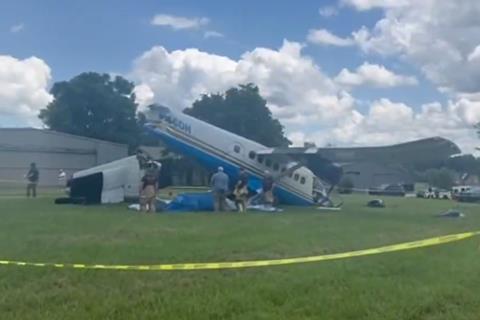
“The pilot was unable to make it back to the airport and chose to land in a field,” says the safety board. “There were two trees in the field that he was unable to avoid.”
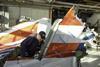
While the aircraft (N166DH) came to rest upright, despite colliding with the trees, it was substantially damaged – its left wing and engine, as well as the tail, separated from the fuselage.
Five passengers and the pilot were seriously injured, but the other 15 occupants escaped injury. The flight had been the pilot’s fourth in the aircraft on the day. Investigators have yet to reach conclusions about the cause of the accident.