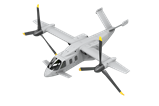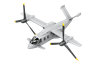















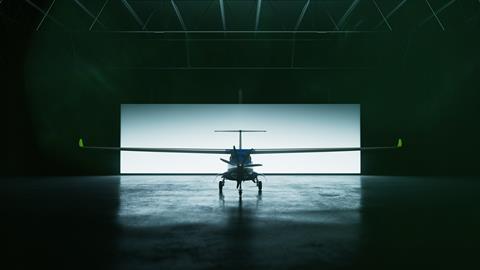
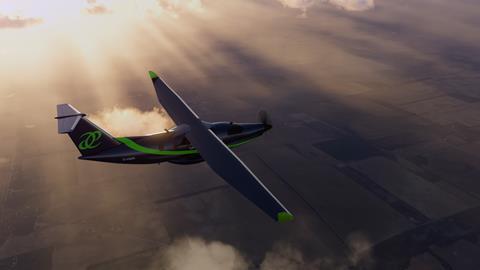
German electric aircraft specialist Vaeridion has hailed the purchase of the former Lilium battery production facility at Oberpfaffen airport, saying the move “significantly derisks” the development timeline of its Microliner nine-seater, keeping it on course for serial production from 2030.
Speaking to FlightGlobal, chief executive Ivor van Dartel says the acquisition – announced on 8 Sept and finalised days later – was too good a chance to pass up.
“If it wasn’t for this opportunity, we wouldn’t have had this type of facility at this point in time,” he says.
While he declines to detail the size of the all-cash transaction, van Dartel estimates that to build and fit out a comparable facility from scratch would have cost around €5-10 million ($5.8-11.7 million).
“We would not be in a position to do something of that size for a couple of years down the line after several more rounds of fund raising,” he says.
“So in a way we have saved money we didn’t have, but now we have this facility we can really accelerate.”
However, this does not mean the Microliner’s development will be faster, simply that “it significantly derisks the timeline that we already had” by creating a part of the supply chain “that didn’t exist”.
Vaeridion’s acquisition of the facility is actually two separate deals: a tenancy agreement with the building’s landlord and an asset purchase from Lilium’s administrator covering its contents.
In the latter case, the equipment includes laser welding machines and other automated production systems, vital for a planned ramp-up in output.
“At the moment the automation level for assembling the first battery modules is low, which also limits our production volume,” he says.
“This fits our current needs but if we are talking about a ‘copper bird’ [test rig] or then at some point flight testing we need higher output and there we have means for automation.”
Production of battery packs at Oberpfaffenhofen will begin in early 2026, transferring from Vaeridion’s current facility at Holzkirchen to the south of Munich, although the latter will continue to serve as the hub for research and development activities.
Van Dartel also highlights the site’s “growth potential”, which will be sufficient, with additional investment, to support low-rate serial production.
“The Oberpfaffenhofen site could be developed further to enable production of up to 50 aircraft per year,” he adds.
Additionally, the Oberpfaffen site will now serve as Vaeridion’s initial final assembly line for the Microliner, with prototypes and production aircraft to be built there.
It also fixes the Munich-based company’s centre of gravity in Bavaria, building on other existing partnerships in the region with TU Munich, GKN Aerospace, Bosch Engineering, Aero-Dienst, Bauhaus Luftfahrt and MT-Propeller.
Vaeridion is targeting first flight of its initial production-conforming aircraft at the end of 2027 or in early 2028, with certification to follow around two years later.