













Plans by electric aircraft developers to launch air taxi operations in the Middle East before achieving US and European certifications are making some advanced air mobility executives uneasy.
Speaking this week, the board chair of UK air taxi developer Vertical Aerospace made he clear he takes a dim view of such plans, while the chief executive of US firm Electra cautioned against pushing novel technologies too fast through regulatory approval.

“These US competitors seem to now be pursuing a strategy of what I call ‘certification tourism’, which is not really a great idea,” Vertical chair Domhnal Slattery said on 19 November.
“Stuff can go wrong,” he adds, speaking during an aviation event hosted by Honeywell in Washington, DC. “I’m specifically talking about Abu Dhabi and Dubai”.
Slattery does not name competitors. His publicly traded firm is pursuing certification of its VX4 electric vertical take-off and landing (eVTOL) aircraft by the UK’s Civil Aviation Authority and Europe’s EASA.
But US air taxi developers Archer Aviation and Joby Aviation, also publicly traded, have recently pivoted sharply toward the Middle East and are now seeking approvals in the United Arab Emirates. They have done so as their efforts to achieve FAA certifications have taken longer than anticipated.
Joby aims to launch operations in Dubai, saying such flights “could precede type certification by the FAA”, according to securities filings. Highlighting its efforts, the company flew its aircraft at the Dubai air show earlier this week.
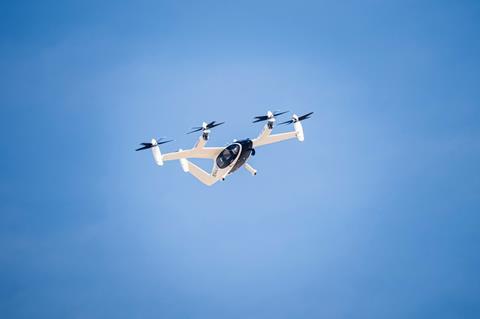
Archer is following a similar strategy, pursuing a “UAE regulatory pathway” and targeting Abu Dhabi as its launch city.
“Our goal is to begin early commercial operations with our Midnight aircraft in Abu Dhabi in the United Arab Emirates and ramp our operations from there,” Archer regulatory filings say.
Both companies also this week revealed plans to begin demonstration “sandbox” flights in Saudi Arabia. They describe their Middle East efforts as a structured means of evaluating their aircraft, and they insist the operations will be safe.
“Our collaborations with forward-thinking regulators like the UAE’s [General Civil Aviation Authority] are not a shortcut; the process with the GCAA is in direct alignment with the FAA certification methodology and certification basis we’ve been building alongside the administration since 2016. The GCAA is actively adopting the stringent US type certification standards as their foundation for airworthiness,” Joby tells FlightGlobal.
“Generating operational flight data in real-world environments like Dubai improves our aircraft, strengthens our maintenance protocols and ultimately de-risks the entire certification programme,” it adds.
Archer does not respond to a request for comment. It has identified several “Launch Edition”-branded target markets to receive pre-certification aircraft, including Abu Dhabi, Ethiopia and Indonesia. The company said earlier this year that the strategy aims to “establish a pragmatic and repeatable commercialisation playbook to deploy Midnight in early adopter markets in advance of type certification in the US”.
Slattery from Vertical cautions such efforts could backfire. “Jurisdictions want to be at the forefront of urban air mobility, which I applaud,” he says. “But they do not have the competencies, capabilities and resources to certify an aircraft.”
“We have to put the hand up and say, ‘This isn’t a good idea – the certification tourism piece,’” Slattery adds. “If something goes wrong, that is going to be a black-swan day for all of these new technologies. We will all get walked downward in the tsunami.”
Marc Allen, chief executive of privately held Electra – a US hybrid-electric fixed-wing aircraft developer that does not compete directly against eVTOL firms – warns against moving too fast.
“Impatience is not a winning attribute for anybody in aerospace… Impatience may collide at some point with reality,” he says without naming companies.
Allen views the Middle East shift partly as response to pressures publicly traded companies face from investors eager to see progress.
“Being public, in a development context, is very hard, and I think it forces any of us who are in that position to look for ways to bring the investment community along and keep telling a story of progress,” he says. “It’s a natural outcome.”

The FAA has recently taken steps to advance air taxis approvals, but much remains uncertain.
“Many of the rules for eVTOL certification and operations are still being finalised by the FAA, and the FAA could revise the existing rules and regulations or impose additional requirements,” a Joby 2024 regulatory filing notes.
The FAA’s recent efforts include guidance issued in 2024 to help eVTOL developers navigate type certification. Because eVTOLs do not fall neatly in FAA aircraft certification categories, the agency will approve air taxis using standards pulled from various categories. An eVTOL could be subject, for example, to transport-aircraft and rotorcraft regulations.
In October 2024, the FAA finalised air taxi operating and pilot qualification rules.
This year, the US Department of Transportation (DOT) established a joint industry-government programme to “develop new frameworks and regulations enabling safe [eVTOL] operations”. The programme could see approval of some pre-certification flights, the DOT said.
Also this year, the FAA partnered with regulators in Australia, Canada, New Zealand and the UK to begin aligning eVTOL airworthiness and certification standards.
Story updated on 24 November to include comments from Joby.