











Boeing’s defence unit and the International Association of Machinists and Aerospace Workers (IAM) have reached a tentative deal to end a nearly five-week strike at the company’s fighter aircraft assembly complex.
Some 3,200 workers at several production lines in the St. Louis, Missouri area have been on strike since early August, after rejecting a labour contract offered by Boeing.
The machinists have been seeking pay increases beyond an initial offer of 25%.
Now, Boeing and IAM negotiators say they have reached an agreement that would substantially raise wages over a five-year period, while also restoring a signing bonus that Boeing had revoked after workers rejected the initial offer.
“We’ve found a path forward on a five-year contract offer that grows wages by 45% on average,” said Dan Gillian, general manager of Boeing’s air dominance portfolio, on 10 September.
“It remains the best deal we’ve ever offered to IAM 837 and we encourage our team to vote yes so we can get back to work building amazing products for our customers,” Gillian adds.
The tentative agreement must still be ratified by individual IAM members. Those workers rejected the previous deal in a late-July vote, rejecting the endorsement of their own union leaders.
Notably, the latest agreement comes after weeks of deadlocked negotiations, but just days after Boeing announced that it was starting the process of hiring permanent replacements for the striking machinists.
“The five-year tentative agreement includes improvements to general wage increases and restores a signing bonus,” IAM leadership says. “IAM Union members will be provided with more information soon.”
A vote on the new contract proposal is scheduled for 12 September.
The strike is Boeing’s second major labour disruption in less than 12 months, with the first being a much larger strike of commercial aircraft machinists in Washington state in 2024.
That work stoppage saw more than 30,000 machinists walk off the job for 52 days, shuttering a significant portion of Boeing’s passenger jet production.
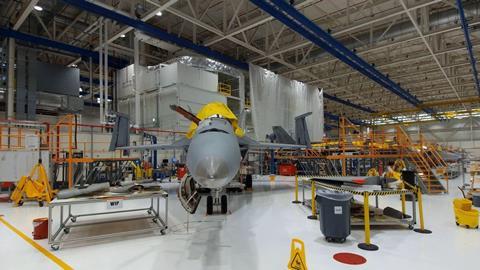
Unlike the Washington strike, Boeing says it has been able to maintain production on its fighter assembly lines, at least to some degree, throughout the current disruption.
The company achieved this by reassigning non-union workers with similar skill sets in the St. Louis area.
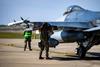
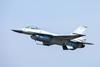
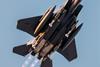
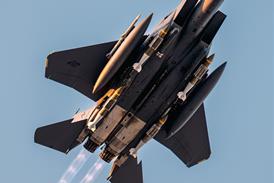
Aircraft lines affected by the strike include the F/A-18E/F Super Hornet, F-15EX Eagle II, T-7A Red Hawk and MQ-25 Stingray.
Several lines producing precision-guided munitions have also been impacted, although Boeing says production there has also continued.