










Stealth fighters from Denmark are now patrolling the skies over Greenland, supported by a French aerial refueller, amid a transatlantic standoff over control of the Arctic island territory.
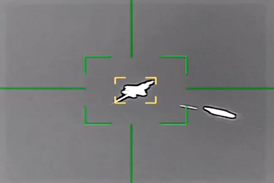
Imagery shared by the Danish Armed Forces (DAF) shows two of the country’s Lockheed Martin F-35A fighter jets flying over the rugged east coast of Greenland near Kulusuk.
Video of the flight, which occurred on 16 January, is circulating online.
Copenhagen says the stealth fighters made the passage directly from their base at Fighter Wing Skrydstrup in Denmark, with refuelling support from a French air force Airbus A330 Multi-Role Tanker Transport.
The French jet departed from a base in southern France, to which it returned after completing the operation in Greenland, which Denmark is describing as a training mission.
The sortie also included a flyby of the Faroe Islands, another autonomous Danish territory in the North Atlantic.
“The mission aimed to practice joint operations involving aerial refuelling, long-distance flights, and safety [sic] under the harsh Arctic conditions,” the DAF says.

Copenhagen notes the RDAF conducted similar flights with a French tanker along Greenland’s west coast last year, using Lockheed Martin F-16 fighters. The RDAF retired its final F-16A/B fighters, replacing those legacy aircraft with the newer F-35A.
However, the latest F-35 sortie is part of a broader build-up of Danish and European forces on and around Greenland, amid an aggressive rhetorical push from the United States to take control of the island.
US President Donald Trump has repeatedly insisted that Washington must control Greenland for national security reasons, claiming that Denmark is incapable of securing the territory from vague and ill-defined claims of a threat from China and Russia.
“We are going to do something on Greenland whether they like it or not,” Trump said earlier this month.
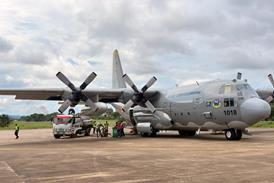
In response, Denmark on 15 January launched Operation Arctic Endurance – a wide ranging series of military drills set centred around Greenland that will run throughout 2026. Danish personnel began arriving immediately via transport aircraft.
Denmark also reached out to its NATO allies, requesting they also commit forces to the effort.
France, Germany, the UK, Sweden, the Netherlands and Norway have all pledged troops.
Copenhagen says planning and reconnaissance teams from several of those partners have already made visits to Greenland ahead of larger bodies of troops, assessing the logistical and operational requirements for deploying to the harsh Arctic locale during the winter.
The initial phase of the exercise primarily being conducted around the capital city Nuuk and in Kangerlussuaq on the west coast.
Additional fighter sorties are also planned throughout the duration of the mission.
“Flights involving F-35 fighter jets and tanker aircraft will therefore continue in the period ahead,” the Danish Armed Forces say.

Meanwhile, national leaders convened in Davos, Switzerland for the annual World Economic Forum, where French President Emmanuel Macron is seeking to broker an emergency summit between Trump and other stakeholders in the unfolding crisis.
Ahead of the gathering, Trump declared he will enact punitive import tariffs on goods coming from the countries participating in the Danish-led exercises in Greenland.
Canadian Prime Minister Mark Carney, whose country has long been a target of Trump’s threats and trade sanctions, delivered a fiery speech describing Washington’s territorial and economic aggression as the end of global era.
“We are in the midst of a rupture, not a transition,” Carney said on 20 January from Davos.
The prime minister added that Canada stands “firmly with Greenland and Denmark” in the matter of self-determination.
The tough talk does not bode well for the prospects of Canada’s previously agreed upon deal to purchase 88 American-made F-35As from Lockheed – a contract that Carney placed under review when he took office in 2025.
Public opinion in Canada has dramatically soured on the purchase, particularly after Swedish airframer Saab re-entered the fray with an offer of local production – if Canada instead selects the Gripen E/F as its new fighter.
That Saab jet lost out to the F-35A in the Royal Canadian Air Force’s competitive selection process, but political tensions now have authorities in Ottawa looking for ways to reduce their reliance on American defence suppliers.
Funds for 16 F-35As have already been committed, with the remaining balance now up for grabs.