
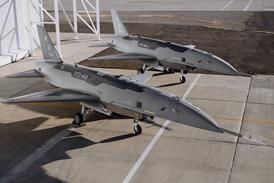














The Royal Australian Air Force (RAAF) has taken delivery of its first L3Harris MC-55A Peregrine intelligence, surveillance, reconnaissance and electronic warfare (ISREW) aircraft.
The aircraft, derived from a Gulfstream G550 business jet, arrived at RAAF Edinburgh on 24 January, according to Australia’s Department of Defence (DoD).
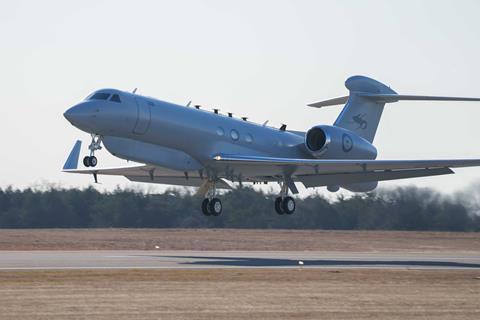
The RAAF is due to operate four examples under No 10 Sqn. The aircraft will complement other RAAF assets such as the Boeing P-8A Poseidon maritime patrol aircraft and Northrop Grumman MQ-4C Triton unmanned air vehicle.
“The MC-55A is a long-range, surveillance and reconnaissance aircraft designed to deliver multiple sources of intelligence in support of Defence operations,” says the DoD of the new asset.
“This advanced capability reinforces Australia’s national defence posture and contributes to deterrence. Integrated within a focused and agile force, the MC-55A ensures the RAAF is ready to detect, disrupt, deter, and if necessary, defeat threats – underpinning the Australian Defence Force’s [ADF’s] commitment to readiness and resilience.”
The aircraft were obtained through the US government’s Foreign Military Sales process, with L3Harris contracted by the US Air Force (USAF) for integration and testing work.
The DoD did not provide details as to when the subsequent three ISREW aircraft will be delivered.
L3Harris says that the follow-on aircraft remain in USAF possession as they support RAAF training and pre-delivery requirements.
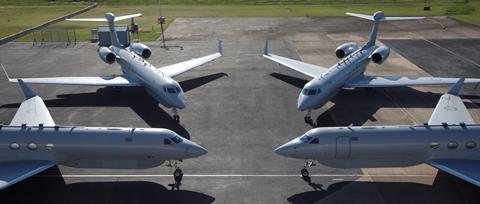
Original plans had called for the RAAF to receive its first aircraft at the end of 2023, with initial operational capability to follow in 2024.
The aircraft’s configuration required significant changes to the G550 outer mould line, along with a new airworthiness certification. That certification process, along with the initial process of integrating Australia’s unique sensor suite, delayed the programme.
“The introduction of the MC-55A Peregrine represents a significant step forward in strengthening Australia’s ability to monitor and protect its strategic interests, including key maritime approaches,” says Australian defence minister Richard Marles.
“This capability will integrate seamlessly with allied and partner systems, enabling the air force and ADF to share intelligence with security partners like the United Kingdom and United States – reinforcing our collective security and enhancing regional stability.”