










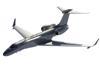

Singapore will acquire a new fleet of maritime patrol aircraft, based on the Gulfstream G550 business jet.
The country’s Ministry of Defence on 27 February published a fact sheet on the G550 Maritime Surveillance Aircraft (G550-MSA), describing the twinjet as providing early warning of maritime threats and enhancing awareness in the maritime domain.
Notably, the new acquisition will be in addition to Singapore’s planned buy of four P-8A Poseidon maritime patrol jets from Boeing.
“The G550-MSA will complement the Boeing P-8A maritime patrol aircraft as part of Singapore’s maritime security surveillance network to better protect Singapore and our sea lines of communication from maritime security threats,” the defence ministry says.
The announcement does not provide specifics as to the planned number of G550-MSA aircraft. Each jet will be equipped with a maritime search radar, electro-optical/infrared sensors, and communication and identification systems that will allow the crew of two pilots and six systems officers to simultaneously detect, identify and track multiple targets.
There is no indication that the G550-MSA will be equipped with lethally-armed anti-submarine warfare weaponry, as is the P-8A.
Notably, the Republic of Singapore Air Force already operates four G550s adapted for airborne early warning and control tasks.

The addition of a long-endurance surveillance platform to complement the Poseidon is in-line with the approach being taken by other P-8A operators. Canada plans to field 11 uncrewed General Atomics Aeronautical Systems MQ-9B SeaGuardians alongside its 16 P-8As.
Ottawa says the long-endurance MQ-9Bs will be be responsible for tedious and time consuming patrol missions, allowing the crewed P-8As to respond to specific threats or investigate suspicious activity once it has been identified.
Converting business jets into military aircraft for special missions like maritime patrol has emerged as an increasingly popular choice for operators around the world.
In addition to being commercially available with existing sustainment infrastructure worldwide, business jets offer increased range and flight performance compared to the turboprop and transport types that were typically used for special missions in the past.
Gulfstream has seen repeated success in offering the G550 for special mission conversions, including the EA-37B Compass Call, which is being acquired by the US Air Force and Italy.
L3Harris is the systems integrator for the platform, while BAE Systems provides the sensitive electronic warfare and communications mission package.
Australia’s MC-55 Peregrine long-range surveillance aircraft – another L3Harris project – is also based on the G550.
The US Army is pursuing its own fleet of long-range intelligence, surveillance and reconnaissance jets based on the Bombardier Global 6500.
Most business jet conversions require substantial modification to the outer mould shape of the aircraft, which allow for the addition of custom-built sensor packages, tailored for the jet’s particular mission set.