

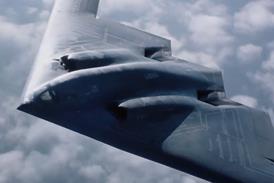















Ending a major point of uncertainty for the US aerospace industry, elected lawmakers in Washington say they will support a Trump Administration plan to provide only minimal funding to the US Navy’s (USN’s) sixth-generation fighter programme.
Known officially as the Next Generation Fighter and colloquially as the F/A-XX, the aircraft development programme intends to deliver a carrier-based fighter to succeed the navy’s large fleet of Boeing F/A-18E/F Super Hornet and EA-18G electronic attack jets.
However, in what lawmakers describe as the final version of the annual defence policy bill known as the National Defense Authorization Act (NDAA), Congress appears poised to enact significant funding cuts to the F/A-XX programme, as requested by the Trump Administration.
The administration’s fiscal year 2026 budget request to Congress was decidedly cool toward the naval fighter, including only $74 million for F/A-XX development – 84% less than the $453 million approved for the programme in FY2025.
On 10 December, the US House of Representatives voted to pass the 2026 NDAA with only $74 million directed toward the Next Generation Fighter programme. The Senate already passed its own version of the legislation in October containing similar cuts.

A Pentagon official who spoke to FlightGlobal in June on condition of anonymity said the administration has opted to maximise resources going to the US Air Force’s (USAF’s) land-based sixth-generation fighter and to effectively keep the navy’s F/A-XX on life support.
“We did make a strategic decision to go all-in on F-47,” the defence official said of the FY2026 budget request.
Boeing was selected as the winner of the USAF’s Next Generation Air Dominance competition in March, with the company’s design designated F-47.
That programme is set to receive more than $2.5 billion in development funding in FY2026, under the latest (and allegedly final) draft of the NDAA. An additional $400 million was allocated to the F-47 development effort under a one-time budget reconciliation spending package passed in July.
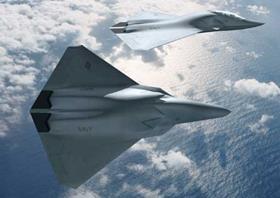
The Armed Services Committee of the House of Representatives says the FY2026 NDAA includes “full funding” for both the F-47 and F/A-XX, indicating the bill will go along with the administration’s requests.
What that means for the future of the sixth-generation naval fighter is unclear.
The defence official who spoke to FlightGlobal earlier this year said the goal was to provide enough financial support for the navy to make source selection for the Next Generation Fighter, but not necessarily advance into production.
“Our belief [is] that the industrial base can only handle going fast on one programme at this time, and the presidential priority [is] to go all-in on F-47 and get that programme right while maintaining the option for F/A-XX in the future,” the source said.
Industry officials, including the chief executive of Boeing Defense, Space & Security, Steve Parker, have said they are capable of supporting both fighter efforts simultaneously.
The navy has not announced its choice of a final supplier for the still-unnamed F/A-XX, although Boeing and Northrop Grumman are presumptive finalists after Lockheed Martin was eliminated early in 2025.
For much of the summer and autumn, it seemed likely Congress would override the White House and provide more robust levels of funding to the F/A-XX programme.
That appears to be the case for the air force’s Boeing E-7A Wedgetail programme, which the White House and Pentagon chief Pete Hegseth are seeking to end before moving into full procurement. The FY2026 NDAA would prevent that, at least in the short term.
An earlier draft of the FY2026 defence budget released by the House appropriations committee in June would have circumvented the administration’s cuts and restored F/A-XX funding. Lawmakers at the time even expressed a preference for increasing the programme’s FY2026 budget to $971 million.
In response, the White House issued a memo outlining its rationale for an emphasis on the F-47 at the expense of the carrier-based sixth-generation fighter.
“Awarding the F/A-XX contract as written is likely to delay the higher-priority F-47 programme, with low likelihood of improving the timeline to field a navy sixth-generation fighter,” the executive office of the president said.
Although Congress has not yet approved the NDAA, and must separately pass appropriations legislation with actual spending authorisations, a legislative override of the White House’s wishes on F/A-XX now appears less likely – though certainly not impossible.
As is always the case with Washington budget politics, little will be certain until the final budget is passed, which is sure to be a fraught process as the USA exits the longest-ever government shutdown and moves toward contentious mid-term elections in November 2026.
Story updated on 11 December following passage of the 2026 National Defense Authorization Act in the US House of Representatives.