















Airbus Helicopters and GE Aerospace are to continue their collaboration on a next-generation rotorcraft propulsion system offering significantly lower fuel burn than current engines.
Announcing the start of the project’s second phase, the partners say the latest step will focus on advancing detailed engine design concepts and evaluating component-level efficiencies.
Phase-one “foundational research” activities kicked off in 2024. The pact has a goal of developing an engine that “sets new standards in efficiency, reliability, and environmental responsibility”, the pair say.
“The continuation of the study will explore opportunities to significantly reduce fuel consumption and CO2 emissions while maintaining the performance, durability, and reliability demanded by next-generation rotorcraft,” the partners state.
However, there are no details on the broad parameters of the project, such as the proposed engine’s power class or targeted fuel-burn reduction.
“Together, we are focused on understanding what it will take to deliver meaningful sustainability and efficiency gains, while continuing to meet the demanding mission needs of our helicopter operators,” says Elissa Lee, executive director of commercial turboshaft engines at GE Aerospace.
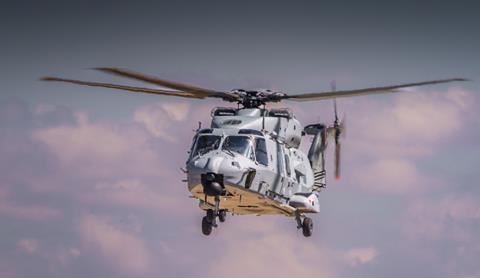
Airbus Helicopters has traditionally looked to France-based Safran Helicopter Engines and Pratt & Whitney Canada for its propulsion requirements. Of all its in-production platforms, only the NH Industries NH90 is available with GE engines.