













European safety regulators are urging airport operators to implement continuous use of runway stop-bars as a defence against incursions, pointing out that such incidents are increasing – both in absolute terms and relative to the number of flights.
Use of stop-bars is “widely recognised” as “one of the most effective barriers” for preventing incursions, says the European Union Aviation Safety Agency, but it adds: “They are not always used to their full potential.”
Stop-bar use is required during low-visibility operations. Although EASA recommends their use as a barrier at other times, it claims in a newly-issued safety bulletin that this continuous use is “only occasionally applied” – even when there is heightened local exposure to incursion risks.
EASA highlights last year’s Japan Airlines Airbus A350 collision with a Coast Guard turboprop at Tokyo Haneda. The airport was equipped with stop-bars but they were unavailable on the night of the accident and, in any case, only used when visibility was low.
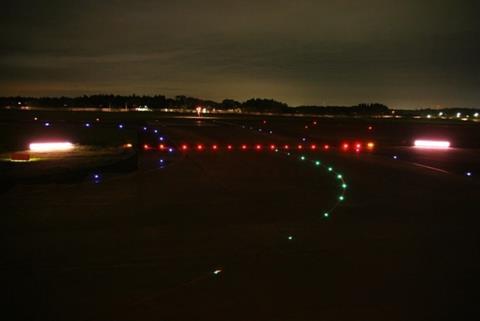
The regulator also identifies several other safety incidents in which stop-bars – available at the time, but not operating – would have presented a potential barrier.
Swiss, Danish and Spanish aviation safety investigation authorities have all issued separate recommendations, after incursion events, centred on continuous stop-bar use.
EASA acknowledges that the implementation of continuous stop-bar use is a “complex change” that requires “thorough co-ordination and robust planning” – and that the transition itself could introduce safety risks, which need to be assessed and mitigated.
“It is important to develop a detailed implementation plan, taking into account the potential impact on runway throughput and [air traffic control] workload,” adds the bulleting.
“While it is possible to introduce [24h] stop-bar use with limited or no impact, depending on the operational exposure of the [airport] and the traffic density, additional investments may be necessary.”
Although the bulletin is aimed at airports which already have stop-bar infrastructure, it emphasises that other facilities, which do not offer low-visibility operations, should consider installing them as part of an incursion-prevention strategy.