












Chilean investigators have determined that the cap of a rocker switch, which controlled a Boeing 787 captain’s seat, had not been fixed in place with adhesive before the seat shifted and caused an in-flight upset.
Both pilots were in their seats as the LATAM 787-9 (CC-BGG) cruised at 41,000ft, en route from Sydney to Auckland on 11 March 2024.
The cabin manager was also in the cockpit, in an observer’s seat, conversing with the pilots at the end of the meal service. Another flight attendant then entered the cockpit to retrieve the meal trays.
While taking the trays, says Chilean accident investigation authority JIA, the attendant brushed against the upper rear side of the captain’s seat, inadvertently pressing on a hinged guard flap which shields the seat-adjustment rocker switch.
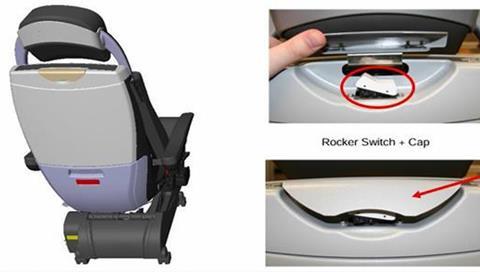
The cap of the rocker switch had been loose and was displaced – and, as a result, the guard flap was not flush. When the flight attendant contacted the flap, it pressed in turn against the loose cap and activated the rocker switch.
Investigators state that the captain was seated and turned towards the right, talking to the cabin manager, when his seat suddenly shifted forwards and trapped his crossed legs against the control column.
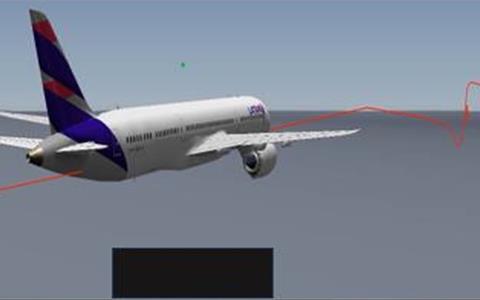
This exerted sufficient pressure to disengage the autopilot and the aircraft entered a sharp descent reaching 3,165ft/min. The flight attendant testified that they were “lifted towards the ceiling of the aircraft and briefly suspended”, before the first officer regained control.
Analysis shows that the event, from the beginning of the seat shift to the stabilisation of the flight, lasted around 12s.
Two passengers and one cabin crew member sustained injuries serious enough for hospitalisation once the aircraft landed.
The JIA found that the problem of loose rocker switch caps had emerged at least seven years earlier, and that a March 2017 service bulletin from seat manufacturer Ipeco had recommended using an adhesive to fix the cap in place.
Boeing also published service letter later the same year advising operators to incorporate the service bulletin.
The service letter had referred to an occurrence in which a first officer’s seat had “moved without an activation command”, pointing out that a loose rocker-switch cap could either jam the switch, or cause it to be pressed by the guard flap.
But the JIA found that, at the time of the LATAM incident, the service bulletin had “not been applied to the seat involved”.
About five months after the event, the US FAA published an urgent airworthiness directive mandating implementation of a further service bulletin. The FAA stated that it had received four additional reports from Boeing of uncommanded pilot seat movements – including one in June 2024 – of which at least three were due to loose rocker-switch caps.