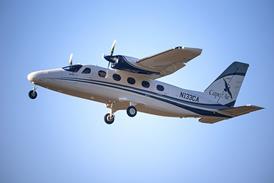












Dutch investigators have been unable to determine conclusively why a Blackshape BK 160 descended rapidly and fatally crashed into the Zwarte Meer lake, during instruction for a student pilot – although it highlights that the lesson focused on upset recovery.
The Dutch Safety Board inquiry into the light trainer accident has closed after running for more than three-and-a-half years.
Uncertainty over the cause of the crash, which was followed by a second accident – in Malaysia in February 2024 – led to the type being temporarily grounded by the European Union Aviation Safety Agency.
While EASA lifted the prohibition after three months, based on evidence that the Malaysian aircraft had been operated beyond its certified envelope, the reasons for the Dutch crash remained unclear.
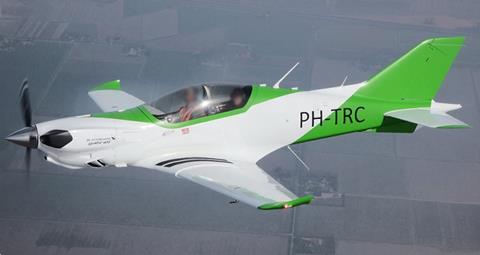
The aircraft, with an instructor and student pilot on board, departed Lelystad on 28 June 2022.
About 20min later, it entered a descending 180° right turn at 5,800ft. “Up until this right turn, the available flight data does not indicate any abnormalities,” says the safety board.
The aircraft descended from 5,800ft to 4,700ft, it states, then briefly regained altitude before entering a high-speed descent and crashing into the lake in a “near-vertical” attitude – “very likely as a result of an uncontrolled flight situation”. Neither occupant survived.
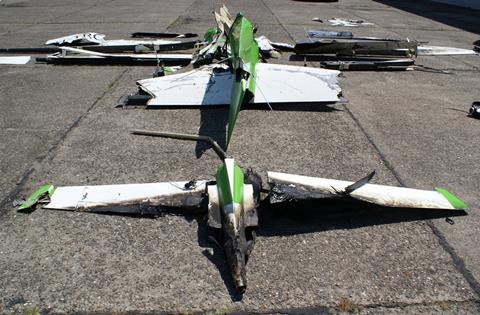
Investigators concluded that burn marks on the aircraft’s structure were the result of post-impact fire.
Owing to the extensive damage to the composite aircraft, and limited flight data available, the inquiry could not definitively determine the cause of the loss of control.
It has ruled out engine or fuel system failures, and says flight-control integrity was maintained until impact. There is also no evidence that weather or medical circumstances contributed to the crash.
But the inquiry points out that the training sortie – part of a multi-crew pilot licence course – involved recovery from unusual attitudes.
“It is deemed possible that the aircraft inadvertently entered a spin, spiral dive or combination of those sometime after the descending right turn was initiated,” the safety board says.
“If this has been the case, it remains inconclusive why the flight crew was unable to recover from this situation before the aircraft crashed.”
The inquiry is unable to conclude whether any manoeuvres took place which were beyond the aircraft’s operational limits.
Analysis found the centre-of-gravity was within limits although the maximum take-off weight was exceeded by 17-37kg. While this would have been insignificant in terms of the stall speed, it “could have contributed” to an increase of altitude loss during a spin, the safety board says.
Although wing-skin damage on the wreckage appears similar to that from a fuel-tank overpressure, the inquiry believes this was unlikely and probably the result of the impact. The inquiry could not fully rule out flap asymmetry, owing to a missing actuator, but says all fractures found in the flap system parts were impact-related.