












Korean auditors have determined that a concrete ILS antenna support, into which a Boeing 737-800 crashed at Muan airport, was built to reduce the costs associated with regional airport development.
The country’s Board of Audit and Inspection has highlighted the decision in an assessment of “vulnerable” areas of aviation safety across 15 domestic airports.
It follows the fatal Jeju Air 737 landing accident at Muan on 29 December 2024, during which the jet overran runway 19 and collided with a berm supporting the ILS localiser.
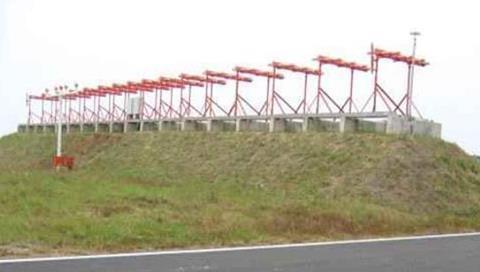
According to the newly-released audit, Muan’s runway has a 0.2% slope along its main length, but a 1% slope over a distance of 265m at each end.
By implementing these relatively steep end-slopes, the Korean land and transport ministry “reduced the amount of earthwork”, says the audit, “thereby reducing construction costs”.
But it adds: “For smooth radio transmission, [the localiser antenna] must be higher than the surface of the runway.
“If the slope of the runway…is large, the localiser needs to be installed higher.”
This led to reinforced concrete berms – with a height of 1.73m and 2.46m – being built respectively to support the runway 01 and 19 localisers.
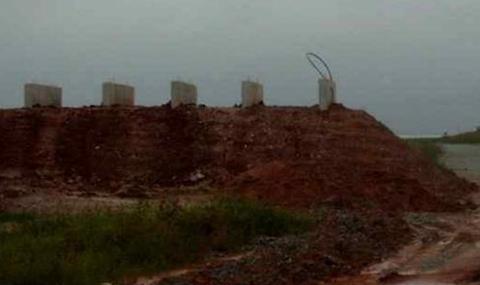
The audit contrasts this decision at the smaller regional airport with the situation at the main Seoul Incheon airport, where runway 15/33 is flat and has only a “minimum” longitudinal slope of 0.26-0.55% at the ends – eliminating the need for a similar berm.
Muan was one of eight airports across which 14 localiser foundation structures – either with reinforced concrete or steel frames – were found to have been installed, the audit states.
Destruction of the Jeju 737 during the collision resulted in 179 fatalities, with only two survivors. The inquiry into the accident has yet to conclude.