














US investigators have highlighted relatively short anti-icing holdover times in their inquiry into a fatal Bombardier Challenger 650 take-off accident at Bangor.
The jet underwent de-icing and anti-icing treatment prior to the 25 January night-time departure, the National Transportation Safety Board confirms in preliminary findings.
None of the six occupants survived when the aircraft rolled 77° to the right just 3s after lifting off from runway 33.
Flight-data recorder information shows the aircraft, bound for Paris’s Chalons Vatry airport, had rotated at 140kt and started to climb, with a slight left roll, when both stick-shakers activated briefly at a height of 11ft.
The jet then transitioned quickly from the left roll to an increasing right roll at 14ft.
Although the control-wheel positions were not recorded, the subsequent aileron deflections were consistent with a full left-roll control input. As the right bank reached 77° both stick-shakers activated again.
The jet’s right wing-tip struck the ground, as indicated by scrape marks on the runway some 5,800ft from the approach end and 42ft to the right of the centreline.
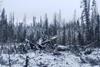
Trailed debris over a distance of 1,270ft shows the aircraft departed the right side of the runway and came to rest inverted with its landing-gear extended, its wings still attached to the fuselage, and its engines partially attached to their pylons. The airframe sustained further damage from a prolonged post-impact fire.
Preliminary information from the flight-data recorder did not reveal any evidence of a flight-control malfunction. Both engines continued generating take-off thrust, states the safety board, and there was no pre-impact separation of components.
While the inquiry has yet to reach conclusions over the accident, it has detailed the de-icing and anti-icing treatment of the aircraft, and the regulatory guidance on holdover times – the estimated period for which the fluid will prevent ice and snow accumulation.
Application 41USgal (155 litres) of Type I fluid for de-icing took 7min 38s, and was followed – after a 39s interval – by application of 28USgal of Type IV fluid for anti-icing, which took 3min 12s.
The aircraft then sat on the de-icing pad for a further 4min 51s before taxiing for take-off, some 8min 3s after the anti-icing application began.
Review of the cockpit-voice recorder shows the crew discussed holdover times during the taxi to runway 33.
“The pilot commented that it was ‘standard’ to have 14-18min and that if the wait was more than 30min, they would return to the ramp to de-ice again,” says the safety board. “The co-pilot concurred with the pilot.”
It states that the aircraft stopped before reaching the runway hold-short line, waiting for 2min 34s before the crew informed the tower controller that they were ready for take-off.
With wing and cowl anti-ice systems engaged, the jet commenced its take-off roll 1min 7s later – over 16min since the start of anti-icing and about 24min 30s since de-icing began.
Weather conditions at the time included moderate snowfall and a temperature of minus 16°C. The inquiry says US FAA guidelines for the current winter season, indicate a maximum holdover time in such conditions of just 9min from the beginning of anti-ice application.
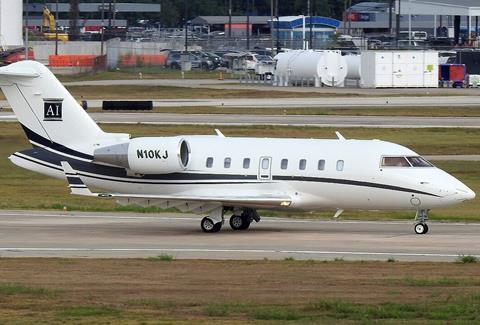
Investigation of the accident is continuing, with the wreckage of the jet (N10KJ) undergoing further examination, along with aircraft operations, performance and human factors analysis.