













The Trump administration’s firing of Todd Inman from his post as member of the National Transportation Safety Board (NTSB) is an unusual instance of a president dismissing a board member who hails from the same political party.
The 6 March dismissal comes as the NTSB addresses critical aviation safety issues and as Congress debates bills stemming from the January 2025 midair collision involving a US Army helicopter and a passenger jet. That fight involves controversial provisions related to mandating aircraft carry ADS-B In (Automatic Dependent Surveillance-Broadcast In) systems. Inman recently raised doubt about the readiness of that technology.
The NTSB is also investigating the deadly 4 November crash of a UPS Boeing MD-11 Freighter after take-off from Louisville.
A Republican who took the seat in March 2024, Inman says that on 6 March the White House informed him, on behalf of President Donald Trump, that he was “terminated effective immediately”.
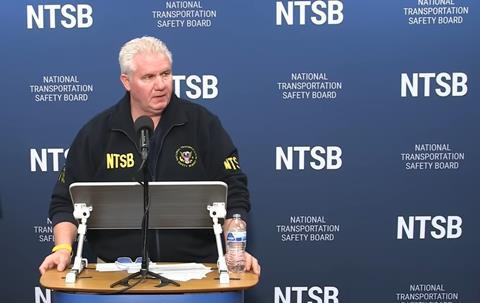
“I have not received any reason for this termination,” Inman initially said.
The White House has since attributed the firing to “reports of inappropriate alcohol use on the job, harassment of staff, misuse of government resources and failure to attend at least half of NTSB meetings”, according to reports.
Inman “categorically” denies those allegations, now saying, “It has become increasingly obvious that this action was a political hit job”.
Reached by FlightGlobal, Inman declines to elaborate.
Competing narratives aside, an administration firing an NTSB board member from the same political party is highly unusual, says former NTSB board member John Goglia.
“They don’t do that,” he says. “The reason why they don’t is that they appointed [him] in the first place. They are admitting they made a mistake.”
President Trump did not appoint Inman. Rather, former President Joe Biden did so to fill an open Republican seat. (US law specifies no more than three of the board’s five members can be nominated by the same party.)
But Inman’s appointment had strong support from Senate Republicans, including from Ted Cruz, then the top Republican on the Senate Transportation Committee.
“I strongly urge my colleagues to support Mr Inman’s nomination to this important safety position,” Cruz said in December 2023.
Inman’s departure leaves the NTSB’s five-member board with one open seat. All the board’s seats had only briefly been full, with the Senate in late February having confirmed the newest board member, John DeLeeuw
“It’s unfortunate, at this important time, when the board is trying to solve major accidents… [to] have this kind of disruption,” says Goglia.
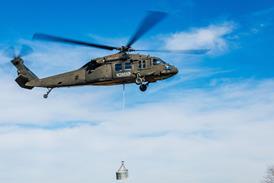
The NTSB recently completed its report into the deadly 29 January 2025 midair collision between a PSA Airlines regional jet and US Army Sikorsky Black Hawk helicopter. The NTSB attributed the accident to numerous factors, including issues with the Federal Aviation Administration’s air traffic control organisation and with the Army.
Notably, the accident has reignited a battle over whether and how the FAA should require aircraft carry to ADS-B In.
The agency already requires aircraft have ADS-B Out, which transmits an aircraft’s position (at least once every second) to ground stations, giving air traffic controllers better “visibility into airborne traffic”, the NTSB says.
Other aircraft can receive ADS-B Out, but only if they carry ADS-B In, which is not required. The NTSB has long urged the FAA to mandate ADS-B In, saying it gives pilots critical information about air traffic. The FAA has previously said ADS-B In was not needed but now says it “supports ADS-B In and technologies like it that enhance situational awareness and safety”.
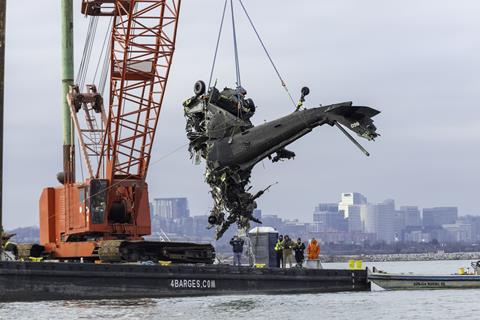
In recent weeks, the aviation industry and US Congress have been divided over competing bills working through the legislature.
The ROTOR Act, introduced by Cruz, would essentially require all aircraft carry ADS-B In. House Republicans meanwhile introduced the ALERT Act, a competing bill with a modified ADS-B In mandate that exempts more aircraft.
The ALERT Act’s sponsor, Republican Sam Graves, says ADS-B In is not yet technologically ready for full implementation.
The NTSB responded by issuing a letter saying it cannot endorse the ALERT Act, faulting the bill for watered-down ADS-B In provisions.
Inman has taken a nuanced approach that has included saying ADS-B In is not ready to be rolled out across the aviation industry. In a statement included with the NTSB’s collision report, he describes ADS-B In as promising technology, saying it might have prevented the collision.
But Inman calls ADS-B In an “emerging technology” not suitable for many older aircraft. “Older models which carry the public for the majority of regional carriers simply do not have the same technology available,” he writes.
Inman cites “technological barriers to implementing ADS-B” into all commercial aircraft and cited concerns about ADS-B In cybersecurity. The technology “cannot be willed into existence… This will be a long road ahead before the right equipment is developed and certified for widespread use”, he writes.
Inman also described FAA reforms as more pressing.
“I hope that by the time ADS-B In is finally ready for implementation across the national airspace, that [the FAA has] learned from this accident and are up to the challenge,” Inman writes. “From what I have seen during this investigation, there is substantial opportunity for improvement.”