













Full implementation of safety changes following a passenger’s fall from an Norra ATR 72-500 in January last year had not been completed before a similar accident with the same aircraft type the following November.
In both occurrences - the earlier at Jyvaskula, the later at Helsinki - a passenger was hospitalised. The passenger in the Helsinki event sustained serious head injuries. Norra, which operates regional services for Finnair, has since reinforced its procedures.
In its inquiry into the Helsinki accident on 12 November 2024, the Finnish safety investigation authority says a passenger was disembarking the aircraft when a collapsible handrail folded down unexpectedly. It has traced the cause to incorrect placement of a quick-release locking pin which secures the handrail in an upright position.
“The unlocked handrail remained upright after the door was opened, giving an impression of the pin being in its correct position,” says the inquiry.
Norra’s door-operating instructions did not require a second cabin crew member to verify the position of the pin, it adds, and no other barriers were in place to guard against human lapses.
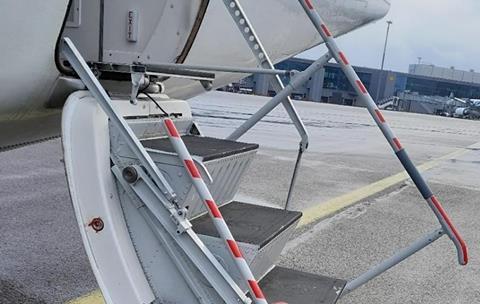
The safety authority says the previous accident, at Jyvaskula about 10 months earlier, took place in similar circumstances.
Although the Jyvaskula event was not subject to a full safety investigation, a preliminary analysis found the handrail mechanism of the aircraft involved deployed “almost normally” despite the quick-release pin’s not being inserted.
“Putting weight on the handrail caused it to collapse,” it stated, adding that the position of a warning flag, which is attached to the pin, appears “nearly identical” in all configurations – making it unreliable as an indicator.
Such mishaps with pin installation were “not exactly uncommon”, it added, but largely went unreported.
The preliminary analysis recommended a number of measures to ATR and aircraft operators for maintenance and procedures regarding the handrail.
Finland’s safety authority states that Norra had revised the door procedure in the aftermath, and the aircraft manufacturer had also worked on safety improvements. “But not all of them had been fielded by the time of the [Helsinki] accident,” it adds.
Norra subsequently issued a safety alert bulletin to cabin crew regarding door operation, and established an amended door-opening procedure two days later. This procedure requires call-outs to ensure the handrail is locked in place. The carrier also mandated weekly inspection of the handrail.