








French investigators believe use of a ballistic-recovery parachute in an emergency should be emphasised – and even simulated – prior to flight, following an analysis of accidents in which such systems were not activated.
Aircraft types including the Cirrus SR20 and SR22, certain light aircraft models from Elixir, Bristell and Pipistrel, and microlight designs, have the capability of operating with ballistic parachutes.
But investigation authority BEA says that recent inquiries have revealed occurrences in which neither pilot nor passenger activated the parachute despite “all the circumstances” for its use being present.
BEA examined 95 occurrences, mostly involving microlights. It found that in 21 of the events, the parachute was activated, and “could have been activated” in the remaining 74 cases – of which 36 were fatal.
Analysis of these incidents, which included testimony from survivors, has identified several factors that contributed to parachute activation.
BEA says the uppermost of these is the “assimilation” of the parachute through knowledge, activation criteria, and a “willingness to use it” – or at least a “lack of aversion” to its use.
It states that the parachute is not usually identified as the first solution, especially when the aircraft remains intact.
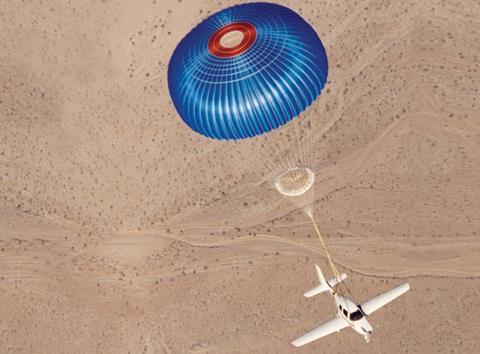
“In the event of a potential loss of control, the pilot, whether consciously or not, stays in the usual thought pattern for flying, maintaining or regaining control of his aircraft,” it says.
But loss of control can leave little time available for complex decision-making and consideration of alternatives in a highly-dynamic situation.
Criteria for parachute activation which have been clearly defined beforehand offer a means for the pilot not to engage in such assessment, and simplify the decision to use it.
“The stress and surprise generated by the situation can hinder taking this decision,” the study acknowledges. “However, it is facilitated if the parachute activation procedure is reviewed during a briefing.”
It adds that “good command” of the physical activation actions – knowing the position of the handle, and the force required, and taking time to simulate deploying the parachute just before the flight – can ensure that the pilot performs the activation “nearly automatically” during an emergency.
BEA says taking the decision to activate the parachute demands a “major effort” by the pilot to change their plan of action, and accept the consequences.
“While it may not be the first option chosen, it must be present from the outset and seen as a positive option,” the study states.
“Not wanting to think about it, or dismissing its use, which may be a symptom of an ego-defensive bias, may serve to reduce the pilot’s anxiety and reassure them in the short term, but is counterproductive in an accident situation.”