















US regulators this year intend to further study so-called competency-based pilot training, but the Federal Aviation Administration has yet to fully embrace the new model despite advocates like Boeing pushing for greater global acceptance.
The FAA’s pending evaluation comes as the training rubric – specifically called “competency-based training and assessment” (CBTA) – has gained wide acceptance outside the USA, with supporters including ICAO insisting it better prepares pilots to deal with unexpected scenarios.
The FAA says it supports CBTA “principles”. And it has approved CBTA aspects as part of Boeing’s transport pilot training programmes.
But the agency has yet to fully endorse CBTA, having warned that tweaking its training framework could have unintended negative consequences. Pilot unions have also expressed concern about jumping too fast into CBTA.
That lack of a formal FAA endorsement has slowed CBTA’s broader roll-out, says Mike Miller, Boeing Global Services’ director of commercial training engineering.
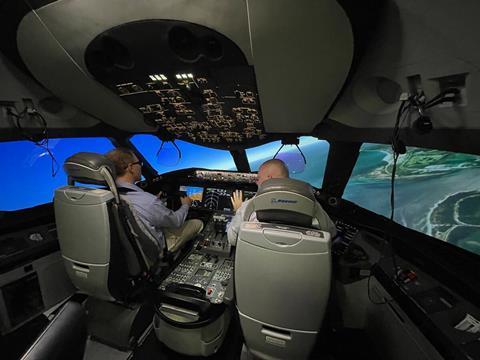
Critics argue that traditional pilot training leans too heavily on flight hours and completing prescribed tasks like rejected take-offs, stall recoveries, engine-out landings and low-visibility approaches.
The historic training standard focuses on three primary technical categories – handling, automation management and application of procedures – and instructors primarily measure students against “fixed, predetermined criteria”, says IATA in a 2024 report endorsing CBTA. That method leaves instructors with little visibility on how students will actually perform and respond to complex flight emergencies, it adds.
“The core FAA guidance…is task-based, so it prescribes things you have to do,” adds Boeing’s Miller.
CBTA advocates make the point that pilots simply cannot train for every eventuality – not with today’s highly complex aircraft. While failures are unusual, those that do occur can involve rare system glitches that pilots have neither encountered during training nor understand.
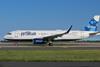
In October last year, a JetBlue Airways Airbus A320 entered an uncontrolled descent due to an issue with its elevator aileron computer. The investigation remains ongoing but Airbus has said solar radiation could have affected the computer.
Such unexpected, statistically anomalous issues can leave pilots struggling to respond, or prompt them to respond in ways that create new problems.
“Airplanes are getting far more complex and far more software driven, far more electric. So knowing exactly what’s going to go wrong is difficult,” Miller says. Boeing notes some 80% of recent aviation accidents resulted mainly from human error.
That’s why CBTA is so important, say advocates. The method encompasses human factors, flying skills and technical training to ensure pilots have “core competencies” needed to properly respond to the unexpected.
TRAINING SHIFT
“If I can demonstrate appropriate workload management with an electrical problem or with a hydraulic problem, I should be able to apply those same skills and behaviors to a problem that maybe we didn’t even think could happen,” says Miller.
“You may never have seen it in training before, but you’ve developed the competencies, the behaviors, the skills to be calm, resilient and navigate that situation.”
As commonly laid out, CBTA training consists of nine competencies: leadership and teamwork, communication, workload management, situational awareness, problem solving and decision making, application of knowledge, manual flightpath management, automated flight-path management, and application of procedures.
Instructors assess students against “observable behaviors” tagged to each of the competencies. For instance, behaviors specific to workload management include delegating and verifying tasks, recovering from interruptions and exercising self-control.
With CBTA, discussions between instructors and pilots are more specific, shifting from, “You really struggled with the take-off” to “You didn’t know your procedures”, or “You… really had issues with your crew communication”, Miller says. “With CBTA, everybody can anchor back to these nine competencies.”
CBTA shifted mainstream in 2006 when ICAO introduced its multi-crew pilot license (MPL), a CBTA-based programme. The MPL is not without controversy, with some critics faulting it for requiring too few actual flight hours. ICAO has since published CBTA-based standards for recurrent training and type ratings.
Three-quarters of national regulators allow some CBTA-based pilot training, including the European Union Aviation Safety Agency and authorities in China, India and the United Arab Emirates. Airbus was an early proponent, having introduced CBTA courses for initial (ab initio) flight training, type ratings and recurrent training.
Boeing leaned heavily into CBTA following the 737 Max accidents, part of a company-wide push to improve safety, though executives say the company was exploring CBTA prior to those accidents, including through efforts with carrier Emirates.
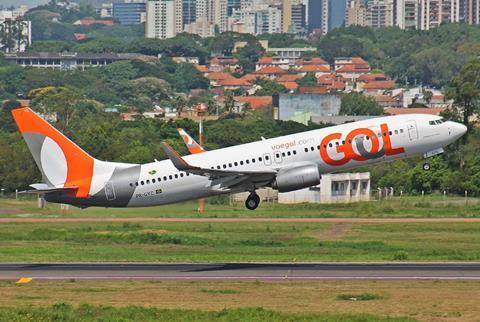
The FAA has approved Boeing to incorporate some CBTA aspects as “an enhancement” to its training courses. The company now uses CBTA to help train pilots at some 60 customers globally, Miller says. Brazil’s Gol says it was the first airline to completely adopt Boeing’s CBTA pilot training programme.
“We are really starting to see movement in Central and South America, and in Southeast Asia”, Miller adds. “We are continuing to expand…the number of customers [and] the number of regulators that we’re working with. We hope to work even closer with the FAA.”
US HOLDS BACK
The USA is a bit of an outlier. While the FAA praises CBTA concepts, it remains unconvinced the rubric is more effective than traditional training methods. It is also concerned about introducing new safety risks.
“The FAA supports competency-based training principles through the use of the Advanced Qualification Program (AQP), which requires integrating technical skills and management skills,” the agency tells FlightGlobal.
Under AQP, which the FAA introduced in 1990, the regulator allows airlines to tweak pilot training to address specific circumstances, based on data. “AQP is a voluntary, performance-based alternative to traditional training and checking requirements that incorporates data analysis to drive curriculum refinement and improvement,” the FAA says.
AQP encompasses concepts including Crew Resource Management (CRM), Threat and Error Management and Risk and Resource Management. CRM came about in the 1980s to help pilots manage resources and improve leadership, decision-making and communication – including by encouraging junior pilots to speak up and senior pilots to welcome feedback. The latter two programmes aim to help pilots better identify, manage and respond to threats.
But the FAA is not ready to wholly endorse CBTA. In November 2023, the agency’s Research, Engineering, and Development Advisory Committee urged the regulator to evaluate CBTA.
“There may be important aspects of existing FAA guidance for training that are already being effectively used by operators which may not be included in current implementations of CBTA,” that report says.
“Operators may inadvertently introduce concepts (such as the competency of knowledge) that could have detrimental impacts to the development of critical knowledge and skills.”
“Research is needed,” it adds.
The FAA agreed with those recommendations. It tells FlightGlobal it intends to begin the recommended review this year.
The USA last year presented its concerns at ICAO’s Assembly in Montreal.
“Conceptually, CBTA has value,” said a paper submitted to the Assembly by the USA and co-sponsored by International Federation of Airline Pilots’ Associations. “There remains limited proof of concept, no comparative trials against conventional training, nor any data that demonstrates ICAO CBTA for pilot training is equivalent to or an improvement over conventional training”.
US pilot association ALPA, one of the IFALPA members, declines to comment.
The US paper calls CBTA’s grading system excessively complex, saying “lack of instructor standardisation leads to differing grading both internal to airlines and fleets”.
“Attempts to map specific behaviours to socially-constructed descriptions of competence create an unreliable approach and lead to an exhaustive list of ‘observable behaviours,’” the paper says. “CBTA pilot competencies need to be reconsidered.”