












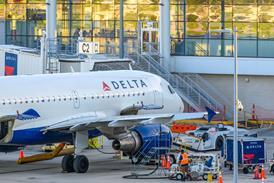
Several Middle East operators have resumed operations – albeit at a limited scale – following days of airspace closures amid an ongoing regional conflict.
UAE-based operators Etihad Airways, Emirates, flydubai and Air Arabia restarted a “reduced” commercial schedule as early as 6 March, following a partial reopening of UAE airspace.
However, neighbouring Qatar has continued to shut its airspace, leaving national carrier Qatar Airways the sole major carrier from the Gulf region with suspended operations.
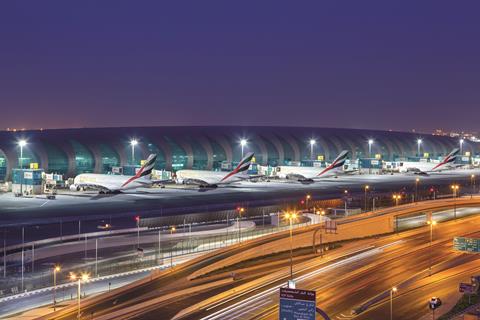
Etihad on 6 March says it has resumed “limited” commercial flights from its Abu Dhabi hub to a few “key destinations”.
“The decision has been taken in coordination with relevant authorities following extensive safety and security assessments. Etihad continues to monitor the situation closely and will only operate flights once all safety criteria are met,” the carrier states.
Its schedules show flights to operate between 6 and 19 March, with further updates to come. Cities include Singapore, London, Sydney, Jakarta, Beijing, New York, Delhi and Toronto.
Similarly, Emirates has resumed part of its vast global operations, flying from Dubai to cites like Sydney, Auckland, Bangkok, London, Chicago and Johannesburg.
It adds: “Customers transiting in Dubai will only be accepted for travel if their connecting flight is operating.”
Fellow Dubai-based operator Flydubai also confirms its partial resumption of flights, while Air Arabia also resumed some flights on 6 March, with flights operating out of Sharjah, Abu Dhabi and Ras Al Khaimah.
Separately, Qatar Airways on 8 March says its commercial operations remain suspended amid the closure of Qatari airspace.
However, it has been cleared to operate a series of repatriation flights. The Oneworld carrier states: “Following temporary authorisation from the Qatar Civil Aviation Authority confirming limited operating corridors, Qatar Airways intends to operate the following flight schedule in the coming days to support passengers who have been affected due to the current disruption, and in helping them reunite with family and friends as quickly and safely as possible.”
The special charters on 9 and 10 March include London, Delhi, Frankfurt, Manila as well as Perth.
“These flights do not constitute a confirmation of resumption of scheduled commercial operations,” the carrier adds.
Data from aviation analytics company Cirium shows that flight cancellation rates are the highest at the airports in Doha, Bahrain and Kuwait City, reflecting airspace closures.
In contrast, the percentage of cancelled flights as of 8 March in UAE airports like Dubai and Abu Dhabi are trending downwards. Dubai’s cancelled flights now make up around 44% of all scheduled flights, according to Cirium data.
US and Israeli forces first struck Iran on 28 February, with Tehran responding a day later by firing missiles of its own at the UAE, Qatar, Bahrain, Jordan and Kuwait.
The ensuing conflict has crushed air traffic at key Middle East hubs, with major operators such as Emirates and Qatar Airways having to completely suspend operations.
While Gulf carriers are slowly rebuilding their networks, foreign carriers have remained cautious in their operational restart.
Singapore Airlines, for instance, continues to suspend operations to Dubai through 15 March, while its low-cost unit Scoot suspended flights to Jeddah in Saudi Arabia through 10 March.
Malaysia Airlines resumed operations to Medina and Jeddah from 8 March, while its flights to Doha remain cancelled until 13 March.
Lufthansa’s flights to Dammam, Dubai and Abu Dhabi will be suspended till 10 March, while operations to other Middle East cities like Ammam, Tel Aviv and Beirut will be suspended for longer