











Lufthansa Group believes there are “opportunities and challenges” created by conflict in the Middle East as fuel prices rise but customers seek alternatives to flying through the region’s global hubs.
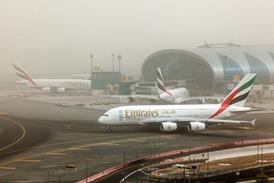
Speaking as the business unveiled its fourth-quarter and full year earnings on 6 March, Lufthansa Group chief financial officer Till Streichert said, through a translator, that it had experienced an “enormous increase” in demand for its flights to Asia and Africa amid the grounding of the Middle East’s global connectors, including Emirates and Qatar Airways, since Israel and the USA launched attacks on Iran on 28 February.
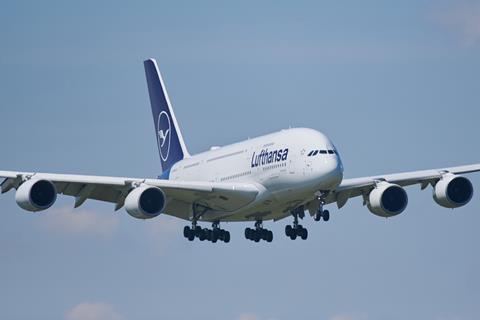
Group chief executive Carsten Spohr names destinations including Bangkok, India, Shanghai, Singapore and South Africa as among those attracting strong passenger demand. It is adding more capacity into some of those markets, having stopped flying to 10 destinations as a result of the Middle East crisis.
Streichert also cites “very positive developments” at Lufthansa Cargo in terms of demand and yields, again as a consequence of customers seeking alternatives to the Middle East carriers and airports.
Spohr acknowledges the risks associated with airspace closures in the region. But while the group also acknowledges the negative impact of higher fuel costs resulting from the conflict, it notes that it is heavily hedged for 2026, claiming to be better placed than its rivals.
That gives Streichert the confidence to state that the group is still on track to record a better financial performance in 2026, towards its medium-term goal of achieving an adjusted EBIT margin of 8% by 2028.
Lufthansa Group achieved a 17% rise in its full-year EBIT to €2 billion ($2.3 billion) in 2025, on revenue up 5% at €39.6 billion. That gave it an operating margin of 4.9%, up from 4.4% in 2024.
Its net profit was down slightly at €1.3 billion.