














Spain has greenlit a massive defence procurement package worth €3.7 billion ($4.3 billion) that includes Turkish Aerospace (TAI) Hurjet trainers, Airbus Defence & Space C295 transports and multiple rotary-wing types from Airbus Helicopters and NH Industries.
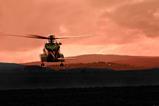
Approved by the government on 24 September, the acquisition comprises up to 45 Hurjets as part of a broader integrated training system. It also encompasses 18 C295s for the air force, 32 NH90s (potentially armed with guided missiles and rockets), 13 H135 light-twin helicopters as training and support assets, 54 of an undisclosed light-twin type – likely to be the H145M – and six H175 super-mediums for VIP transport missions.
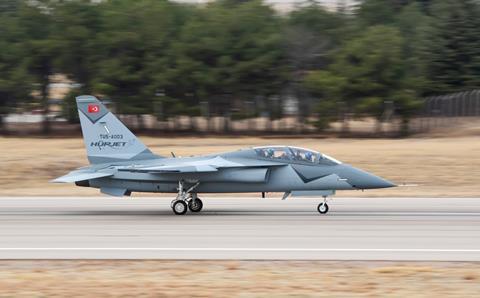
Destined to replace the Spanish air force’s obsolete Northrop F-5Ms, deliveries of an initial batch of Hurjets for familiarisation training is expected in 2028, with a nation-specific version to follow from 2031.
Airbus Defence & Space will modify the Turkish-built aircraft at its domestic facilities to “adapt the platform to meet the requirements of the Spanish air force”, says a government notice.
The full integrated training system, including ground-based assets, will be deployed at Talavera la Real air base in the southwest of the country. Airbus and TAI announced in May they would collaborate to pitch the Hurjet for Spain’s training requirement.
Spain will use the incoming fleet of 18 C295 tactical transports – assembled by Airbus at San Pablo near Seville – to replace legacy CN235s operated by its ETMA military air transport school and CASA C212 Aviocars flown for parachutist training.
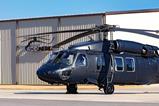
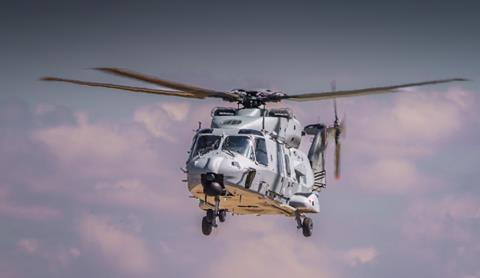
Madrid has also committed to a third batch of up to 32 NH90s – all the TTH troop-transport variant – adding to 45 units already in service or on order.
These will be delivered to the air force, “addressing the need for a common platform” across all three services to replace “the obsolete fleets of our armed forces that have been in service since the late 20th century”.
Additionally, Spain says it is “interested” in arming the 11t-class rotorcraft with rockets and missiles.
NH Industries has been considering arming the NH90 as part of a proposed Block 2 upgrade which could be launched in 2028, depending on operator feedback.
Although the naval NH90 variant – the NFH – carries torpedoes for anti-submarine warfare missions, options on the TTH have been largely limited to door guns, albeit Middle Eastern customer Oman has equipped some with podded 20mm cannons.
There is also more repeat business for Airbus Helicopters, which will benefit from orders for another 13 H135s, on top of the 18 training-and-support assets Spain signed for in late 2021.
To be operated by the air force and navy – which are respectively receiving 11 and seven H135s under the 2021 contract – the new examples will receive the latest technological updates, including “the integration of sensors and systems that enhance the capabilities of the helicopter in the navy”, to allow it to function as an embarked asset.
On top of which, Madrid says it will “continue developing connectivity between helicopters and drones” – so-called Crewed-Uncrewed Teaming – using the H135 as a platform across all armed forces.
There is less clarity about the helicopter that will be procured through the HELIPO programme for a light multipurpose platform.
Spain is to spend €920 million on 54 twin-engined helicopters for advanced training, emergency support and “limited tactical and logistical missions”, it says, replacing its current fleet of older-generation H135s, which have been in service since 2005 and “are at the end of their useful life”.
According to a timetable laid out in acquisition documents, an initial prototype is expected to fly in 2027, with deliveries running from 2028 to 2034.
Although no details of the type to be acquired have been disclosed, it is likely to be the H145M – the H135’s big brother – based on a reference to the availability of the HForce weapons system on the platform, a feature not integrated onto the smaller of the two helicopters.
Lastly, Spain intends for its six incoming H175s to replace elderly AS332 Super Pumas and AS532 Cougars operated by the air force for government-support duties.
While Airbus Helicopters has for several years been seeking a launch customer for the militarised M variant of the H175, given the missions to be carried out by the six aircraft these are likely to be the civil model, but adapted with specific communication and navigation systems.