






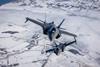

The government of Canada says it has no plans to withdraw from the contractually-obligated purchase of an initial 16 Lockheed Martin F-35A fighter jets.
However, Ottawa is still weighing its options for addressing the remainder of its fighter modernisation need – originally planned to cover 88 of the Lockheed stealth aircraft.
In a 5 October interview with Canadian broadcaster CBC, the country’s minister for defence procurement Stephen Fuhr affirmed that Ottawa will field the 16 F-35As already paid for and undergoing assembly by Lockheed.
However, that commitment no longer extends to the full complement of 88 jets that Canada originally planned to acquire under a 2023 deal with the American defence manufacturer to replace the Royal Canadian Air Force’s (RCAF’s) fleet of aged Boeing F/A-18A Hornets.
“Canada is contractually obligated to 16 aircraft, which are in various stages of production with the manufacturer,” Fuhr told CBC. “A decision on the full programme is currently under review.”
The shakiness of the Canadian F-35 contract is the result of widespread backlash in Canada to rhetoric from US President Donald Trump and his poltical advisors, who have often suggested that Canada would be better off as part of the USA.

Trump has repeatedly referred to Canada as the “51st state” and described former Canadian Prime Minister Justin Trudeau as “Governor Trudeau” – the title used by the heads of state-level government within the American political system.
Canada and other US allies also have questioned Washington’s reliability over repeated suggestions by Trump and his supporters that the USA will need to assert greater control over the semi-autonomous Danish territory of Greenland. Denmark recently hosted multi-national military exercises in Greenland, to which the USA was notably not invited.
Repeated threats from the Trump Administration to tariff imports from US allies, including Canada, have further exacerbated the rift.
Current Prime Minister Mark Carney was swept into power earlier this year on a wave of anti-American sentiment. Although Carney has pledged to dramatically increase Canada’s defence spending, he has also sought to diversify that procurement away from traditional suppliers in the USA.
That policy shift included ordering a review of the country’s F-35 acquisitions plans, including analysis of potential alternatives.
The government is already overdue on delivering a promised report on the matter, which Ottawa had previously said would be released by the end of summer.
In the meantime, the RCAF has continued moving forward with plans to support the F-35A acquisition.
In August, air chief Lieutenant-General Jamie Speiser-Blanchet told FlightGlobal that building a “modern, fifth-generation air force” is among her top priorities.
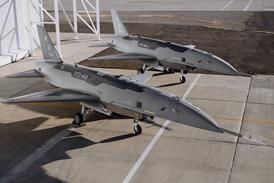
Ottawa has already started construction of infrastructure to support the F-35A at two bases identified to host the stealth fighter. A study is also underway within the Department of National Defence around the possibility of fielding uncrewed tactical jets to support the manned F-35 fleet.
Former senior officers in the RCAF have weighed in with differing opinions on the wisdom of purchasing the US-made F-35.
However, all seem to agree that fielding a mixed fleet would not be a desirable outcome for a service the size of the RCAF, citing the extra logistics burden of maintaining multiple fighter types.
That outcome would seem to be inevitable, if the Carney government opts to reduce its total F-35 buy and pursue some European-made alternative like the Saab Gripen E/F or Dassault Rafale F4.
In his remarks to CBC, Fuhr seemed to indicate that not only is the government open to a mixed fleet, but it in fact views such a configuration as a benefit – offering additional flexibility to commanders and lawmakers.
Regarding when the government will finalise its F-35 plans, Fuhr says Carney “will make a decision when he’s ready”.
“We’re a sovereign country,” he says. “We’ll make our own decisions and we’ll stand on our own two feet.”