













Airline executives are urging US lawmakers to address airport security and customs-related delays caused by a lapse in funding for the US Department of Homeland Security (DHS).
Namely, airline leaders are calling for critical aviation workers’ wages to be guaranteed during government shutdowns, and to avoid more major disruptions during busy spring and summer air travel.
Nine CEOs of leading US airlines and cargo carriers – including American Airlines, Delta Air Lines, United Airlines, Southwest Airlines, Alaska Airlines, JetBlue Airways, Atlas Air, UPS and FedEx – signed a 15 March letter from industry advocacy group Airlines for America (A4A) urging lawmakers to protect the wages of security workers and air traffic controllers during shutdowns.
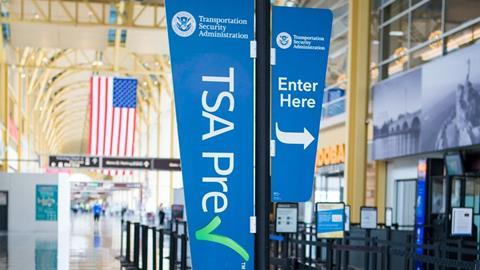
Since funding for DHS lapsed on 14 February, essential workers with the Transportation Security Administration (TSA) and US Customs and Border Protection have been working without pay.
As a result, the rate of unscheduled absences among TSA workers has been elevated, while some workers have left their jobs entirely – creating long lines at understaffed security checkpoints.
”Americans who live in your districts and home states are tired of long lines at airports, travel delays and flight cancellations caused by shutdown after shutdown,” the A4A letter reads. ”Yet once again, air travel is the political football amid another government shutdown.”
The situation recalls the not-so-distant memory of the US government shutdown that hobbled air traffic control throughout the country in October-November last year, with the Federal Aviation Administration mandating capacity cuts at major US airports.
”This problem is solvable, and there are solutions on the table,” A4A says. ”Now it’s up to you, Congress, to move forward on bipartisan proposals that will get federal aviation workers – including TSA officers, US Customs clearance officers at airports and air traffic controllers – paid during shutdowns.”
Airline CEOs call for Congress to first fund the DHS, the most politically contentious piece of a series of funding appropriation bills passed in February. DHS funding stalled largely because it oversees Immigration and Customs Enforcement (ICE), an agency that has drawn intense scrutiny in recent months as the Trump administration carries out an aggressive deportation campaign.
Then, lawmakers should address the longstanding issue of aviation workers going unpaid during shutdowns “so this problem never happens again”.
”Specifically, Congress should pass the Aviation Funding Solvency Act and the Aviation Funding Stability Act, which would guarantee air traffic controllers are paid regardless of the government’s funding status, as well as the Keep America Flying Act, which would provide the same protections to TSA officers who are tasked every day with keeping Americans secure in the skies,” A4A says.
Of those bills, the Aviation Funding Solvency Act currently has the most momentum in Congress. The proposed law would allow the FAA to draw from the Aviation Insurance Revolving Fund during government shutdowns, potentially to pay ATC workers. It was approved by the House Transportation and Infrastructure Committee late last year and awaits a vote before the full House.
The Aviation Funding Stability Act would allow the FAA to draw on funds raises by taxes on airline tickets and fuel. Variations of the bill have re-appeared for years but have yet to gain traction in Congress.
Finally, the Keep America Flying Act would provide temporary appropriations during shutdowns to pay air traffic controllers, TSA screening staff and essential FAA personnel. That bill has yet to advance past the committee level.
While a bill to fund DHS has passed the lower House chamber, negotiations at the higher Senate level remain deadlocked over proposed changes to ICE oversight.
Airlines signing onto A4A’s letter assert that the ”stakes are especially high”.
”US airlines expect 171 million passengers this spring season, a new record,” they say. ”But too many travellers are having to wait in extraordinarily long — and painfully slow — lines at checkpoints.”