












The Trump administration has taken another step toward overhauling US air traffic control (ATC), having hired two firms – RTX and Indra Group – to replace the Federal Aviation Administration’s (FAA’s) network of surveillance radars.
The Department of Transportation and the FAA disclosed the contract awards on 5 January, one month after revealing having hired US technology provider Peraton as prime manager of the planned multi-billion-dollar ATC modernisation push.
“Our radar network is outdated and long overdue for replacement. Many of the units have exceeded their intended service life, making them increasingly expensive to maintain and difficult to support,” says FAA administrator Bryan Bedford.
“We are buying radar systems that will bring production back to the US and provide a vital surveillance backbone to the national airspace system [NAS]”.
The contracts call for RTX and Indra to help replace 612 radars “with modern, commercially available surveillance radars”. The new radars will “consolidate 14 different configurations… simplifying maintenance and logistics” and enhancing “the safety and efficiency of our skies”.
RTX says its contract, worth $438 million, involves subsidiary Collins Aerospace delivering “next-generation co-operative and non-co-operative radar systems”.
Non-co-operative radars are traditional systems using radio signal reflections to identify and track aircraft, while so-called co-operative radars – also known as secondary radars – track aircraft using “interrogations and broadcasts emitted” from transponders on aircraft.
Radars to be supplied by Collins include its co-operative Condor Mk3 system and its non-co-operative ASR-XM radar, the company says.
Spanish company Indra, which has extensive US operations and a large ATC technology business, did not immediately respond to a request for comment.
Indra already operates a Kansas site that produces equipment including radars, communications systems and navigation aids. In October last year, Indra revealed plans to expand that work by investing $50 million to open a new Kansas City manufacturing facility that it expects will come on line this year.
The DOT did not provide additional details about the contracts. Neither it nor the FAA responded to requests for comment.
ATC modernisation is among President Donald Trump’s signature domestic policy initiatives, having thrown his support behind the initiative following the January 2025 midair collision near Ronald Reagan Washington National airport that killed 67 people.
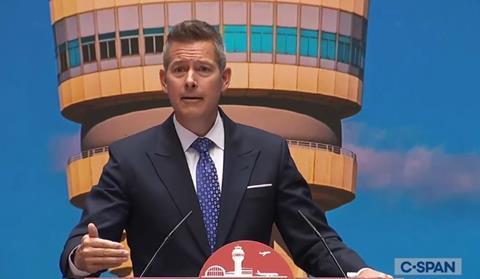
Trump already secured $12.5 billion in funding for the project through the “One, Big, Beautiful Bill” he signed into law in July. DOT secretary Sean Duffy has said the total cost of his agency’s envisioned ATC overhaul will be $31.5 billion.