













American Airlines is still struggling to stabilise operations following last weekend’s punishing winter storm, while other US carriers have resumed regular flight schedules.
Flight-tracking platform FlightAware shows that American has cancelled 480 flights on 28 January, four days after the winter storm began battering its largest hubs – Dallas-Forth Worth and Charlotte – in what American’s leadership team has characterised as the worst weather-related disruption in the airline’s 100-year history.
The 480 flight cancellations represent about 16% of the carrier’s daily flight schedule. Meanwhile, Charlotte-based regional subsidiary PSA Airlines has cancelled about 160 flights, or 18% of its schedule.
Both carriers are also experiencing high numbers of delayed flights.
Meanwhile, other major US carriers, such as Delta Air Lines and United Airlines, have cancelled low double-digit numbers of flights on 28 January.
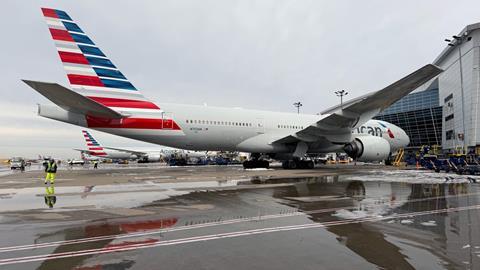
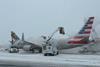
American’s ungainly rebound from the major winter storm is partially attributable to its heavy exposure to the areas of the country hardest hit by severe winter weather. Dallas-Fort Worth International airport turned into an “skating rink” as the result of freezing rain, according to chief executive Robert Isom.
That left aircraft and crews stranded at the carrier’s most-critical hub, with cascading effects throughout American’s network.
Airline executives said they expected flight disruptions to continue into the end of the week during the company’s 27 January earnings call, but insisted that American is among the most-capable US airlines when it comes to recovering from irregular operations.
“Let’s face it; DFW is big in our operation,” Isom says. ”Almost a third of our team members reside in the area. Conditions here are still a skating rink.”
The winter storm badly impacted five of the carrier’s nine largest hubs, further compounding problems across American’s network.
”I believe that we’ve got a couple of more days of digging out,” Isom said on 27 January. “I want to apologise to our customers; [we are] certainly doing everything we can to make sure they are taken care of.
”We’ll work out of this. We’re the best in the business at this, and we’ll be back on track as we get toward the end of the week.”
Rising temperatures have since melted ice covering taxiways and runway surfaces, while American said on 27 January that most aircraft no longer require de-icing treatments. But difficulties are still apparent.
American has long maintained that it excels at rebounding from operational disruptions, apparently trying to draw distinction between itself and competitors such as Southwest Airlines, which memorably melted down following a winter storm in December 2022.
Southwest cancelled some 17,000 flights during the peak of winter holiday air travel as its crew-tracking software became overwhelmed; that carrier says it has since bolstered critical technologies. It has cancelled only five flights on 28 January.
Delta also struggled disproportionately following the CrowdStrike-related IT outage that impacted US airline operations in July 2024.
Following “significant storm activity” in Dallas-Fort Worth, Chicago and Washington DC in the second quarter last year, Isom boasted during the company’s earnings call in July that American “continues to do an excellent job recovering from irregular operations and mitigating the impact on our customers”.
“Thanks to the investments we’ve made in technology and our operations, and our team’s continued focus on controlling what we can control, we were able to recover quickly from these disruptions,” he said.
During the company’s 27 January earnings call, Michael Linenberg, a stock analyst with Deutche Bank, pointed out that Dallas-Fort Worth has repeatedly experienced airline-disrupting weather in recent months. He questioned whether American’s scale-building efforts at its main hub could leave it exposed to future weather events that will “impact the entire system”.
Isom responded by saying the most-recent winter storm was “relatively unprecedented”.
“I don’t want to say that it’s never happened before, but we get this kind of storm once every five-to-10 years; that’s been my experience,” he says. ”We recover as quickly as we can. But over the long term, DFW is one of the fastest-growing metro regions and the product we’re putting out is fantastic.”
American has estimated that it will take a $150-$200 million first-quarter revenue hit as a result of the massive snowstorm.