














India’s civil aviation regulator is advising Air India to circulate recommended Boeing procedures for operating fuel cut-off switches on the 787, after crew concerns emerged during a London Heathrow-Bengaluru service.
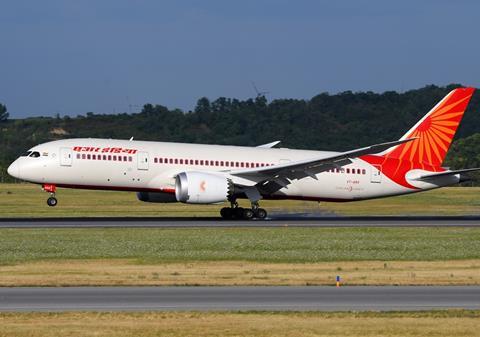
The 1 February flight was conducted by a 787-8 identified by the Indian DGCA as VT-ANX.
It states that, during engine start at Heathrow, the crew twice observed that one of the two fuel-control switches “did not remain positively latched” in the ‘run’ position when “light vertical pressure was applied”.
Pilots need to lift each switch slightly in order to override a locking mechanism designed to prevent the switch being moved inadvertently between the ‘run’ and ‘cut-off’ positions and shutting off fuel to the engines.
Activation of these fuel cut-off switches have been a focus of the continuing investigation into last June’s fatal Air India 787-8 crash at Ahmedabad.
Air India had previously checked the locking mechanisms on its 787s and found all of them to be functional.
But the apparent difficulty with the switch on the Bengaluru flight has prompted the DGCA to look into the situation.
The DGCA says the crew managed to latch the switch on the third attempt, adding that the switch then “remained stable”.
“Before continuing with the rest of [the] procedure, a physical verification was performed by the crew to confirm that the switch was fully and positive latched in the ‘run’ position,” it states.
No abnormal engine parameters or warnings were observed, it adds, either during engine start or any time afterwards.
VT-ANX is fitted with GE Aerospace GEnx powerplants.
The regulator says that, during the flight, the crew took precautionary measures to avoid unnecessary contact with the switch while engine indications were closely monitored.
Flight AI132 subsequently landed at Bengaluru without incident.
The apparent defect was recorded by the crew and the airline’s engineering division performed Boeing-recommended checks on the switches.
According to the DGCA the engineering division checked the left- and right-hand switches, and both were found “satisfactory”, with the locking mechanism “fully seated and not slipping”.
“When full force was applied parallel to the base plate, the switch remained secure,” it states.
But it adds that the switch could be moved “easily” between ‘run’ and ‘cut-off’ if a force was applied in an “incorrect direction”, owing to the base plate “allowing slip when pressed improperly”.
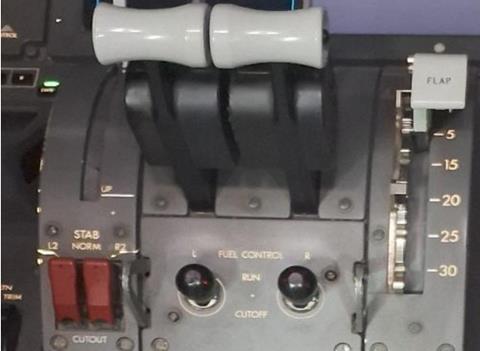
Checks on the switches’ pull-to-unlock force – carried out on both VT-ANX and another aircraft, with DGCA observers – found the forces to be “within limits”, the regulator says.
Air India is being advised, as a result, to ensure all crew members understand the recommended Boeing procedure for operating the switches.
The DGCA has not indicated whether the incident is under consideration by investigators probing the Ahmedabad accident, which occurred as the aircraft (VT-ANB) lifted off on a service to London Gatwick.
Preliminary findings indicated that both fuel-control switches transitioned from the ‘run’ to the ‘cut-off’ position – for reasons yet to be fully determined – just before the twinjet lost height and crashed about 1.7km from the end of departure runway 23.