
















US lawmakers have confirmed longtime regional airline executive Bryan Bedford as head of the Federal Aviation Administration, charging him with oversight of the USA’s civil aviation regulator at a time of intense focus on aviation safety.
The US Senate confirmed on 9 July Bedford’s appointment with a 53-43 vote. Most opposition to President Donald Trump’s pick to lead the FAA came from Democratic lawmakers citing Bedford’s history of advocating for less-strict pilot-training laws to help alleviate the USA’s pilot shortage.
Prior to stepping down from his position last week, Bedford had worked since 1999 as chief executive of Indiana-based Republic Airways, a regional carrier that flies on behalf of the “Big Three” US network carriers – American Airlines, Delta Air Lines and United Airlines.
Now, he will begin a five-year appointment to guide the 40,000-strong agency. Bedford replaces acting FAA administrator Chris Rocheleau, who led the agency on an interim basis following the resignation of Michael Whitaker, a Joe Biden appointee, upon Trump’s 20 January inauguration.
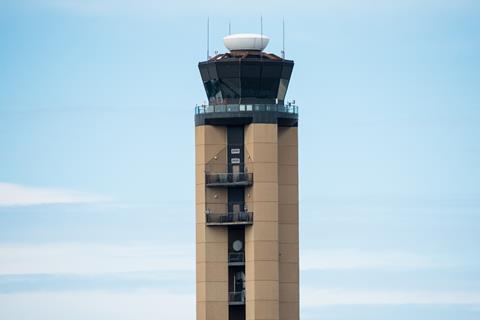
Bedford faces the enormous task of upgrading air traffic control (ATC) systems throughout the country, with funding approved last week as part of Trump’s “One Big Beautiful Bill”. Lawmakers and industry leaders have been pushing for years to upgrade the USA’s creaking ATC system, which relies on decades-old technology and has recently suffered several high-profile radar and telecommunications failures.
The bill allocates $12.5 billion from the US government’s fiscal year 2025 budget for “acquisition, construction, sustainment and improvement of facilities and equipment necessary, to improve or maintain aviation safety”. Transportation Secretary Sean Duffy has previously stated that he will seek further funding for the ATC overhaul, targeting a total of $30 billion for upgrades through 2029.
Bedford will also oversee the planned rollout of the burgeoning advanced air mobility (AAM) sector, which proposes to certificate and commercialise a new class of electric and hybrid-electric air taxis in the decade’s second half.
Vermont-based electric aircraft manufacturer Beta Technologies says that Bedford’s appointment ”comes at a pivotal moment, as the FAA is poised to certify AAM aircraft and other transformative technologies”.
His confirmation is being hailed by industry groups such as Airlines for America (A4A), the National Business Aviation Association (NBAA) and the Regional Airline Association (RAA).
Ed Bolen, chief executive of NBAA, says that Bedford’s ”strategic thinking, extensive leadership experience and consistent focus on safety will guide the agency and industry in working together on the development of a robust and resilient ATC network”.
The RAA, meanwhile, says that Bedford has demonstrated a commitment to ”upgrading aging air traffic control systems [and] bolstering controller staffing”.
”Bedford is well-versed in the unique and crucial role regional airlines play in safely connecting communities of all sizes and has a deep understanding of the opportunities and challenges facing the aviation sector,” the RAA says.
Some lawmakers criticise his track record on pilot training, however. Democratic Senator Maria Cantwell, ranking member of the Senate’s Commerce, Science and Transportation committee, says that the FAA “cannot have a light-touch approach to aviation safety”.
”Mr Bedford’s willingness to change safety policies like reducing pilot-training hours or considering single-pilot cockpits is the opposite of the aggressive oversight the agency needs at this time,” Cantwell says.
Senate minority leader Chuck Schumer characterises Bedford as Trump’s “deeply flawed nominee”, adding that Bedford has “failed to show he’ll put the safety of airline passengers over airline profits”.
Aviation safety has been under an intense spotlight in the USA since a 29 January midair collision between a US Army Sikorsky UH-60 Black Hawk and a PSA Airlines MHIRJ CRJ700 regional jet on final approach to Reagan National airport near Washington, DC.
That accident killed all 67 people aboard both aircraft and brought heightened attention to the FAA’s long-running ATC understaffing issues.
In the months following the collision, repeated ATC equipment failures – particularly at Newark Liberty International airport – increased calls to address the USA’s aging aviation-safety technology.